 ↗
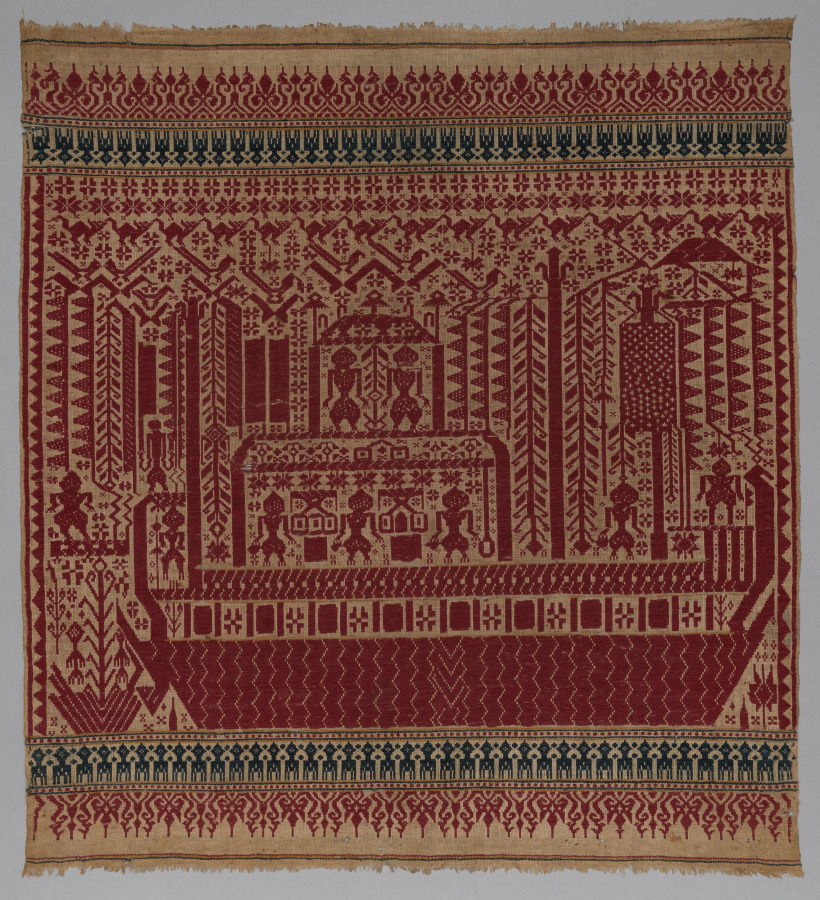
Indonesia, Sumatra, Lampung, 19th century · 1800s
Tampan Pasisir (Ship Cloth)
Creator not recorded
Dudley P. Allen Fund · The Cleveland Museum of Art
Image licence: CC0 · Image policy · Museum record & image source ↗
Creator not recorded by the museum
The Sumatran cloth brings together patterned warp and embroidery. A design prepared in the threads and one added at the surface have quite different relationships to the finished cloth.
A garment's pattern changes with every fold. Choose one band on the tapis and ask what would remain recognisable as the wearer sat or walked.
Site interpretation and practical exercises. Historical and technical evidence is linked below.
Sources for context The Cleveland Museum of Art ↗
Read alongside
"Tapis" from central and southern Sumatra combine warp ikat with embroidery. The angular, geometric designs of the warp ikat can be traced back to the bronze age culture of China. During the first millennium B.C., elements of that culture spread to Indonesia where they survived in remote areas well into the 20th century. Completely different are the mysterious, curvilinear forms of the embroidered bands. Some of these have become too abstracted to identitfy; but others can be recognized as human figures wearing the feathered and horned headdresses of head-hunting rituals. Embroidery designs were presented by a man to his prospective bride, and their motifs were inspired by activities specifically performed by men, such as wood carving, metalwork, and headhunting.
Collection text · The Cleveland Museum of Art · CC0↗Creator not recorded
 ↗
Creator not recorded
 ↗
Creator not recorded
 ↗
Creator not recorded