 ↗
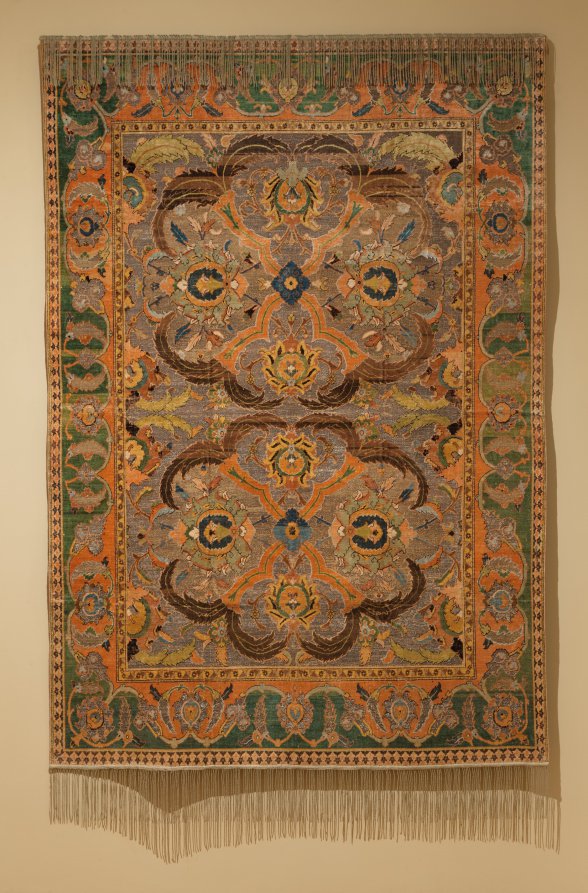
Iran, Isfahan, Safavid period (1501-1722) · 1600–1625
Royal Carpet with Silk and Metal Thread
Creator not recorded
Purchase from the J. H. Wade Fund · The Cleveland Museum of Art
Image licence: CC0 · Image policy · Museum record & image source ↗
Creator not recorded by the museum
Design a letter that can still be read when one stroke looks like a leg. A curved drinking vessel adds a further challenge: only part of the inscription faces the reader at once.
Site interpretation and practical exercises. Historical and technical evidence is linked below.
Sources for context The Cleveland Museum of Art ↗
Read alongside
The highlight of the cup’s decoration is the inscription around the rim, which you see on the walls around you, with letters composed of human figures, animals, and birds. This is known as animated script and it developed in northeast Iran or Afghanistan during the mid-1100s and migrated westward. The inscription on the rim of the Wade Cup is the pinnacle of this form of script with its full-figure animation. The body of the cup is covered with interlacing bands of compartments containing tiny figures of humans and animals. These represent the 12 signs of the zodiac from astrology, the practice of interpreting the influence of planets and stars on earthly affairs. Astrology began in Mesopotamia, was adopted by the Greeks, and then absorbed into medieval Islamic culture through translations of Greek texts.
Collection text · The Cleveland Museum of Art · CC0On the Wade Cup, reading and looking ask you to move at different speeds. Follow the inscription around the rim as a continuous band, then stop at one letter and look for an animal or a human figure. The same silver line has to carry both jobs. When designing lettering, try turning just one stroke into a figure while keeping the word legible.
Site study note · catalogue facts and visual interpretation
Check the museum record ↗↗Creator not recorded
 ↗
Creator not recorded
 ↗
Creator not recorded
 ↗
Creator not recorded