c. 1100–1500
Dates overlap and vary by place; they are not strict boundaries.
Historical style
A movement, period and school are different kinds of historical grouping.
Associations are checked against museum records rather than assigned from dates alone.
Why it emerged
From the twelfth century, expanding towns, powerful bishops and royal patrons supported ambitious churches in western Europe. Cathedral building brought sculpture, stained glass and architecture together; courts and private devotion also created demand for illuminated books and small sacred objects. Gothic describes several regional practices, rather than a group with a manifesto.
Key artists and contributions
Jean Pucelle
Combined delicate manuscript figures with increasingly convincing architectural settings.
Simone Martini
Used elegant lines and richly worked surfaces in Sienese religious painting.
Anonymous cathedral workshops
Stonemasons, glass painters and other specialists made large collaborative visual environments.
What changed afterwards
Its attention to gesture, storytelling and observed detail contributed to later European painting without simply disappearing when Renaissance practices emerged. Nineteenth-century Gothic Revival designers later reinterpreted its architecture and craftsmanship for different religious and political purposes.
Sources and further reading
Original educational overview, informed by the resources below. Artist examples are selective; they are not a complete membership list.
Works in this collection
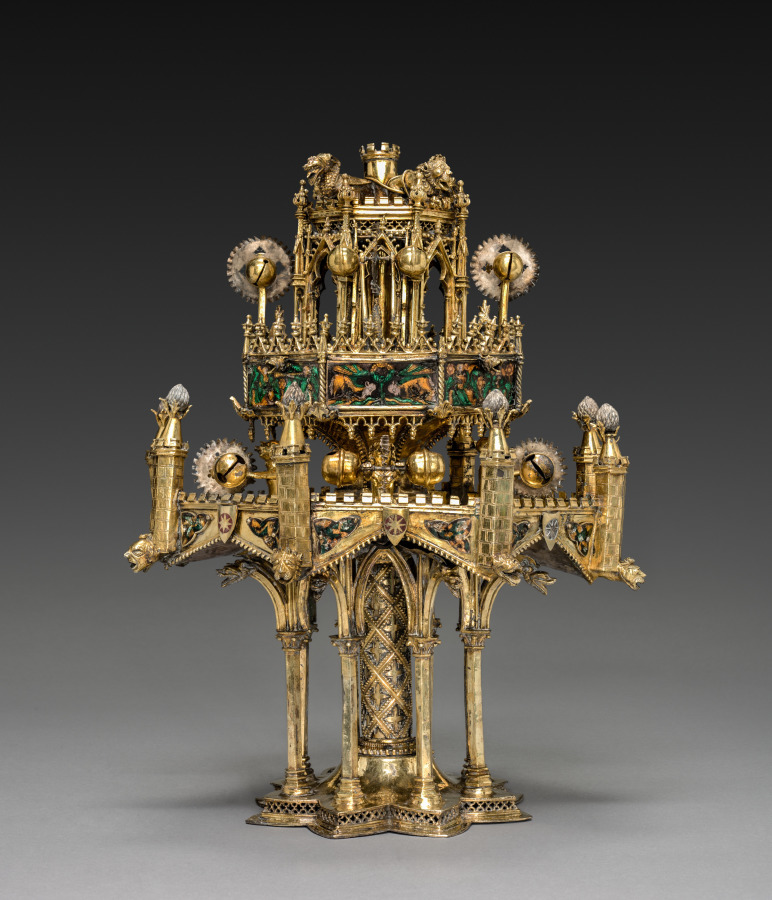 ↗
Table Fountain
Creator not recorded
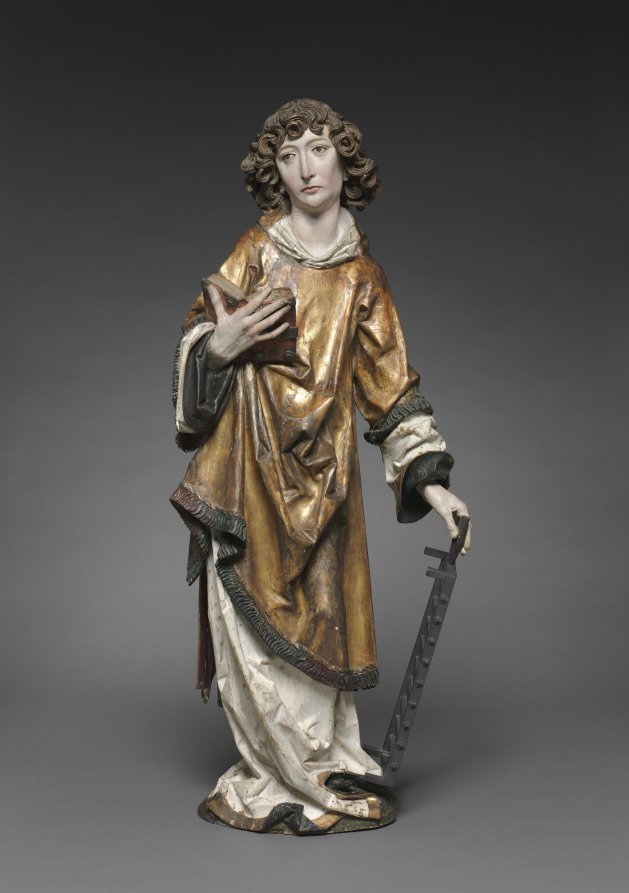 ↗
Saint Lawrence
Tilman Riemenschneider
Movement and school labels are interpretive tools. Individual works can cross boundaries, and an artist’s entire career is not assigned to a single movement.