c. 1400–1600
Dates overlap and vary by place; they are not strict boundaries.
Historical period
A movement, period and school are different kinds of historical grouping.
Associations are checked against museum records rather than assigned from dates alone.
Why it emerged
In Italian cities, commercial wealth, civic rivalry and church patronage supported new artistic commissions. Humanist study renewed attention to ancient texts and objects, while artists investigated bodies, proportion and pictorial space. Religious subjects remained central. Northern European workshops developed related innovations through their own markets, materials and devotional traditions.
Key artists and contributions
Leonardo da Vinci
Connected close observation of anatomy and nature with subtle modelling and psychological interaction.
Michelangelo
Made the expressive, monumental human body central to sculpture and painting.
Albrecht Dürer
Circulated northern and Italian ideas through highly ambitious prints and studies of proportion.
What changed afterwards
Perspective, anatomical study and the prestige of the individual artist became lasting resources for European academies. Later artists both adopted and challenged these conventions. This was a changing historical network, not the beginning of creativity or a universal standard for other cultures.
Sources and further reading
Original educational overview, informed by the resources below. Artist examples are selective; they are not a complete membership list.
Works in this collection
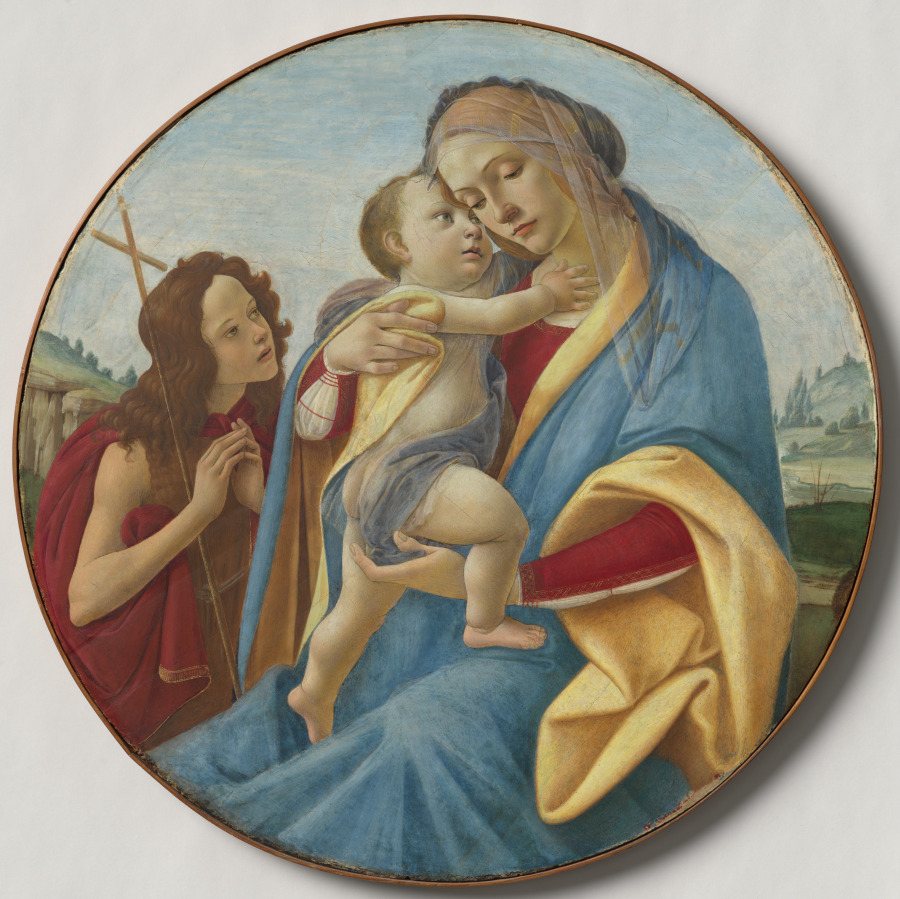 ↗
Virgin and Child with the Young Saint John the Baptist
Sandro Botticelli
 ↗
The Holy Family with Saint John the Baptist and Saint Margaret
Filippino Lippi
Movement and school labels are interpretive tools. Individual works can cross boundaries, and an artist’s entire career is not assigned to a single movement.