c. 1600–1750
Dates overlap and vary by place; they are not strict boundaries.
Historical style
A movement, period and school are different kinds of historical grouping.
Associations are checked against museum records rather than assigned from dates alone.
Why it emerged
Seventeenth-century patrons used images and buildings to persuade, celebrate authority and engage the senses. Catholic renewal encouraged compelling religious art, while monarchies commissioned displays of power. Protestant communities and urban buyers supported different markets, especially in the Dutch Republic. These settings produced varied Baroque practices, not one uniform religious style.
Key artists and contributions
Caravaggio
Brought sacred encounters close through forceful light and physically immediate figures.
Artemisia Gentileschi
Gave biblical heroines commanding physical and psychological presence.
Gian Lorenzo Bernini
Integrated sculpture, architecture and lighting into carefully staged experiences.
Rembrandt van Rijn
Explored light, character and narrative within the Dutch art market.
What changed afterwards
Its orchestration of space and emotion shaped later religious and civic art. The integration of multiple arts remains useful for understanding immersive environments; this is a comparison of methods, not a claim that later media descend from a single Baroque origin.
Sources and further reading
Original educational overview, informed by the resources below. Artist examples are selective; they are not a complete membership list.
Works in this collection
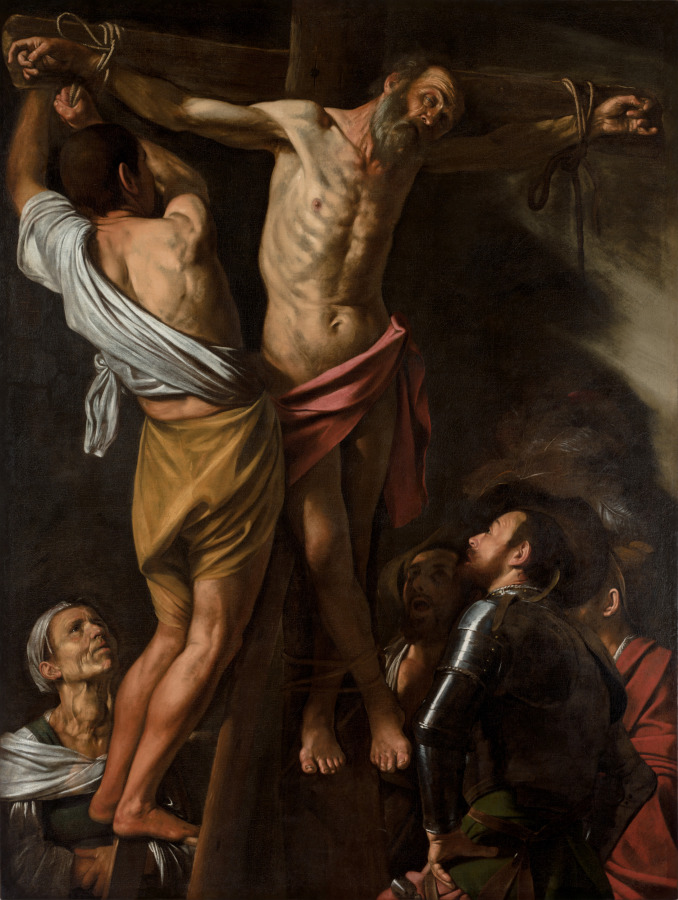 ↗
The Crucifixion of Saint Andrew
Caravaggio
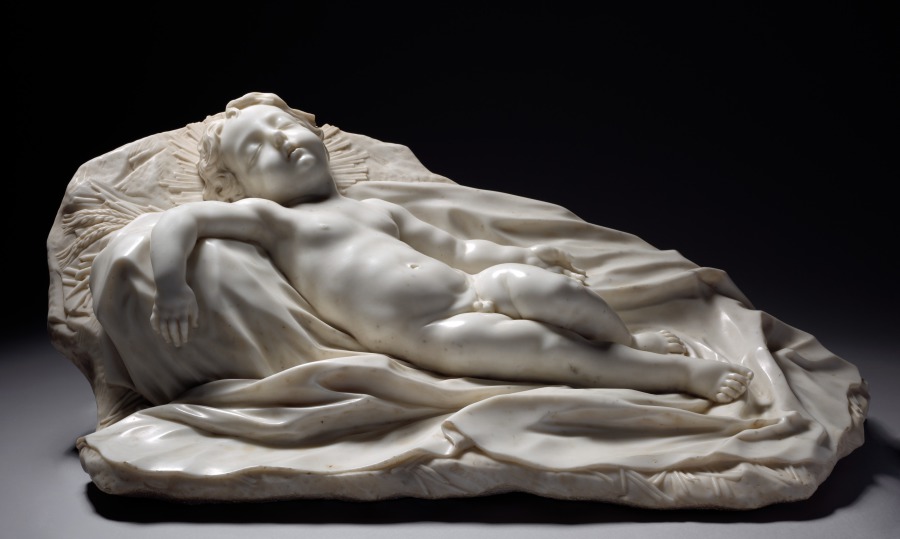 ↗
Sleeping Christ Child
Filippo Parodi
Movement and school labels are interpretive tools. Individual works can cross boundaries, and an artist’s entire career is not assigned to a single movement.