from the Song and Yuan periods
Dates overlap and vary by place; they are not strict boundaries.
Reading a painting
Brushwork, inscription and historical reference can operate together. A landscape may communicate a cultivated position or personal relationship as well as describe a place.
Associations are checked against museum records rather than assigned from dates alone.
Why it emerged
Chinese scholar-official culture linked painting with poetry, calligraphy and cultivated character. From the Song onward, literati arguments valued expressive brushwork over mere resemblance; under the Yuan, dynastic change gave reclusion and historical reference renewed significance. This was a long, contested tradition, not a single movement or a category excluding every professional painter.
Key artists and contributions
Zhao Mengfu
Reworked earlier styles and calligraphic brushwork as a deliberate, learned artistic language.
Ni Zan
Used sparse landscapes and restrained ink to articulate an intensely personal position.
Dong Qichang
Reinterpreted historical masters and shaped influential, selective theories of painting lineages.
What changed afterwards
Its emphasis on dialogue with earlier masters shaped Ming and Qing painting and later debates about Chinese artistic identity. Modern ink artists have both renewed and challenged this inheritance; claims of an unchanging national essence obscure those disagreements.
Sources and further reading
Original educational overview, informed by the resources below. Artist examples are selective; they are not a complete membership list.
Works in this collection
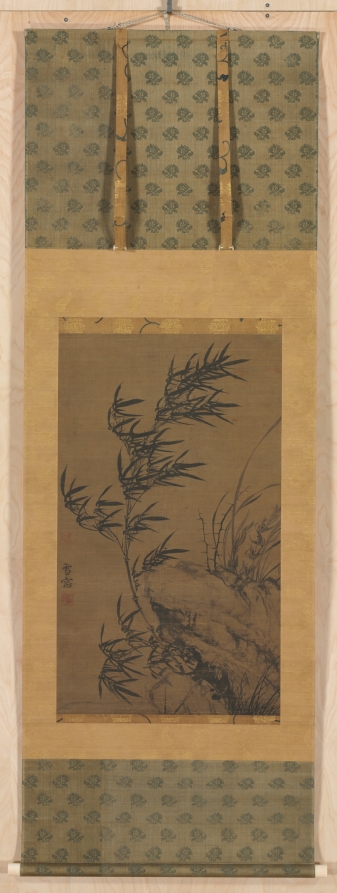 ↗
Bamboo in the Wind
Puming
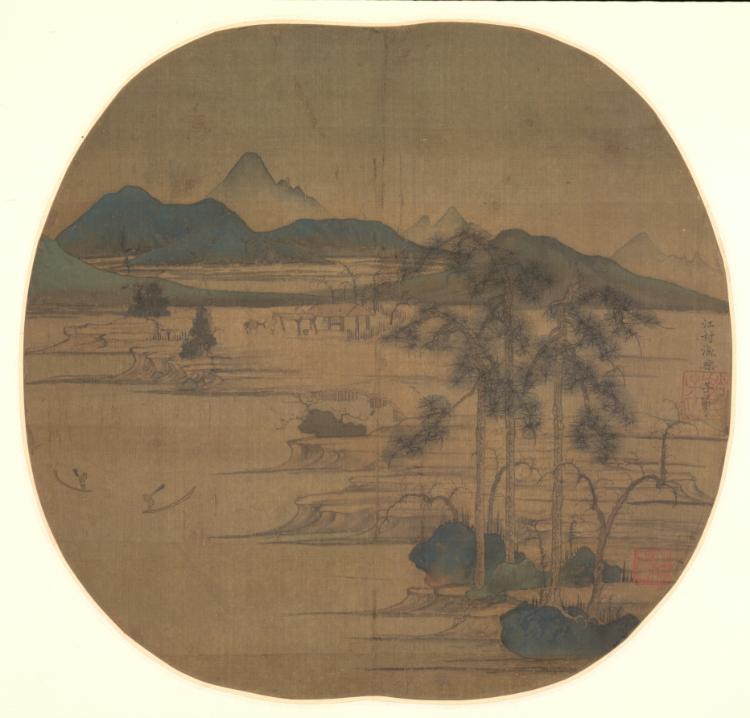 ↗
River Village: Fisherman's Joy
Zhao Mengfu
Movement and school labels are interpretive tools. Individual works can cross boundaries, and an artist’s entire career is not assigned to a single movement.