Edward L. Whittemore Fund · The Cleveland Museum of Art
Image: public domain (CC0) · Museum record & image source ↗
Shri Raga, from a Ragamala
Creator not recorded by the museum
- Date
- c. 1695
- Medium
- Gum tempera and gold on paper
- Dimensions
- Image: 34.4 x 22.5 cm (13 9/16 x 8 7/8 in.); Overall: 38 x 25 cm (14 15/16 x 9 13/16 in.)
- Country / context
- India
- Movement / tradition
- Rajput painting · Source ↗
- Collection
- The Cleveland Museum of Art
- Pathway
- South Asian arts ↗
This painting is from an important series made at a turning point in the history of court painting at the Rajput kingdom of Mewar. For the first time, a royal patron, Amar Singh II (r. 1698–1710), even before his accession to the throne, decided to incorporate Mughal elements into secular art, as seen in the white domed architecture and interest in conveying some sense of spatial depth. Nevertheless, the artist still adheres to the use of horizontal registers and bold planes of color. The codified iconography of Shri Raga involves a royal couple listening to recitations. Shri Raga is described as: "Splendidly enthroned of peerless beauty and lovely as the autumn moon, he sits hearing stories from Narada and Tumburu. By the great sages he is called Shri Raga King." Amar Singh has playfully substituted his own portrait for that of the generic king, and a woman for that of the sage. In music, Shri Raga is associated with the season of autumn and the harvest festivals, here evoked by the dancing female musicians in the lower register.
Collection text · The Cleveland Museum of Art · CC0Start with what you can see: shapes, surface, colour and scale. How might the listed materials affect the way this object was made and experienced?
Looking prompt · an invitation to observe, not a historical interpretation.Follow a connection.
Explore the tradition ↗ ↗
View from the Top of the Rock, looking over the native Town, Trichinopoly, India
Nicholas & Co.
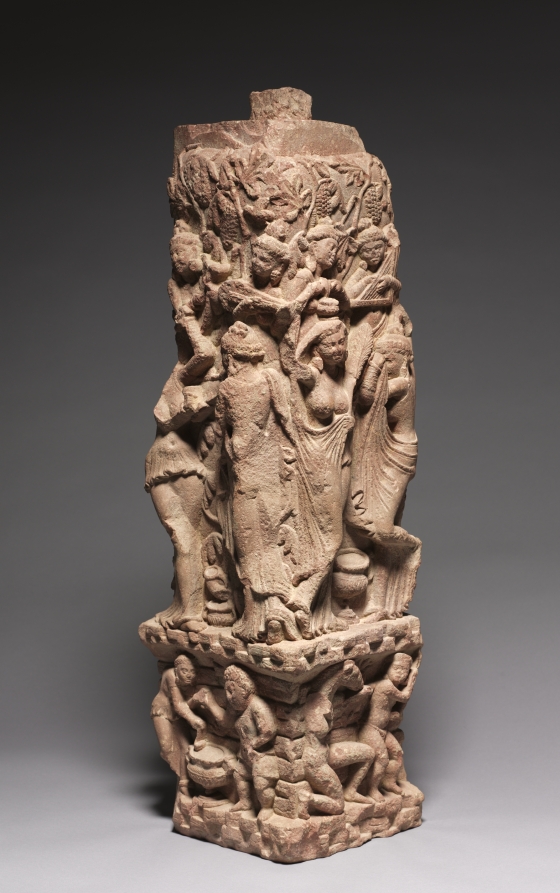 ↗
Corner Railing Pillar with Drinking Scenes, Yakshis, and Musicians
Creator not recorded
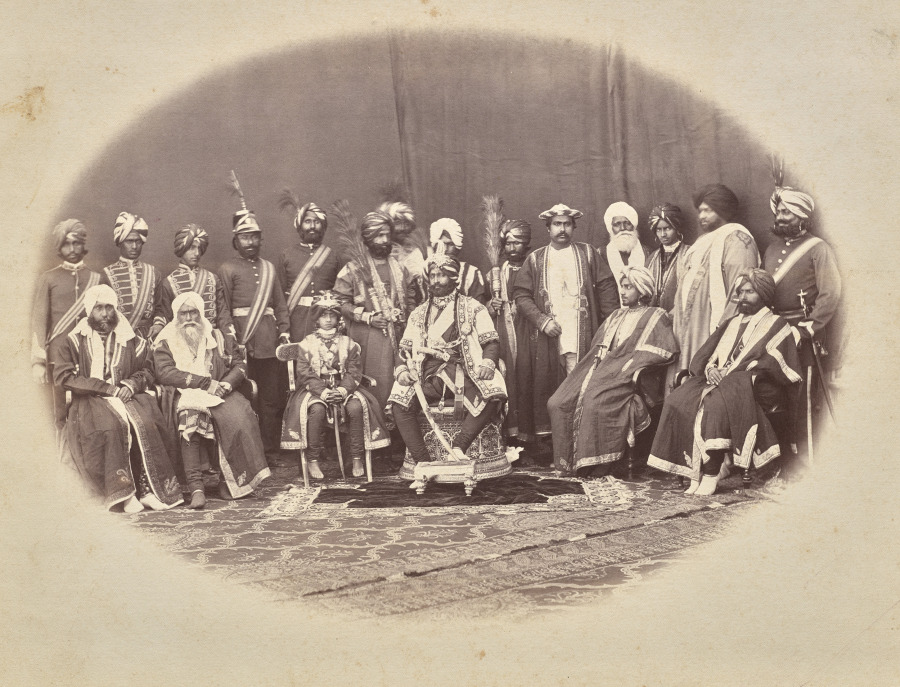 ↗
Maharaja Ranbir Singh of Jammu and Kashmir with Sons and Courtiers
Bourne & Shepherd
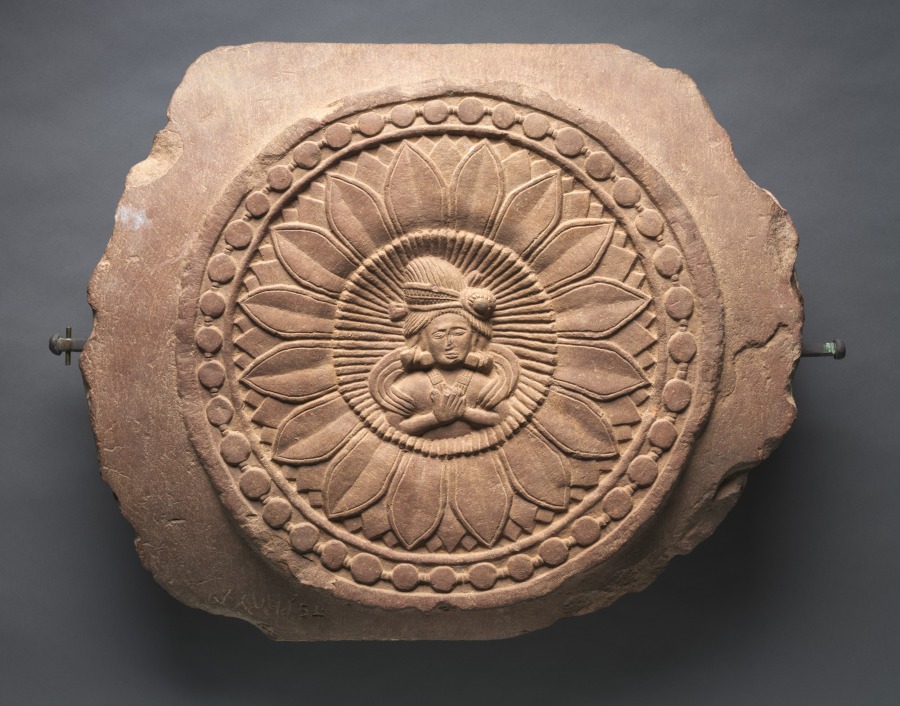 ↗
Double-Faced Crossbar from a Railing
Creator not recorded