Grace Rainey Rogers Fund · The Cleveland Museum of Art
Image: public domain (CC0) · Museum record & image source ↗
Bahram Gur Arrives at the House of a Merchant, text page (recto); Bahram Gur Slays a Dragon (verso), from a Shahnama (Book of Kings) of Firdausi (940–1019 or 1025), known as the Great Mongol Shahnama
Creator not recorded by the museum
- Date
- 1330–35
- Medium
- opaque watercolor, ink, and gold on paper
- Dimensions
- Sheet: 45.8 x 34.4 cm (18 1/16 x 13 9/16 in.)
- Country / context
- Iran
- Movement / tradition
- Middle Eastern and North African arts
- Collection
- The Cleveland Museum of Art
- Pathway
- Middle Eastern and North African arts ↗
In this intense painting, Bahram Gur plunges his sword into the breast of a dragon. A favorite character from Iran's pre-Islamic history, Bahram Gur (reigned 420–38 CE) was a popular ruler of the Sasanian dynasty and a great hunter. He took the name "Gur," meaning onager (a wild ass), because it was his preferred game, although he also excelled at killing dragons. As evidenced by this illustration's rock formations, tree trunk, and dragon, Iranian painting in the Mongol period borrowed numerous stylistic and spatial elements from Chinese models. With the surging landscape and writhing dragon rendered with equal energy, this is a picture of extraordinary unity and concentration.
Collection text · The Cleveland Museum of Art · CC0Start with what you can see: shapes, surface, colour and scale. How might the listed materials affect the way this object was made and experienced?
Looking prompt · an invitation to observe, not a historical interpretation.Follow a connection.
Explore the tradition ↗ ↗
Cherry Blossoms in the Wind
Utagawa Toyokuni
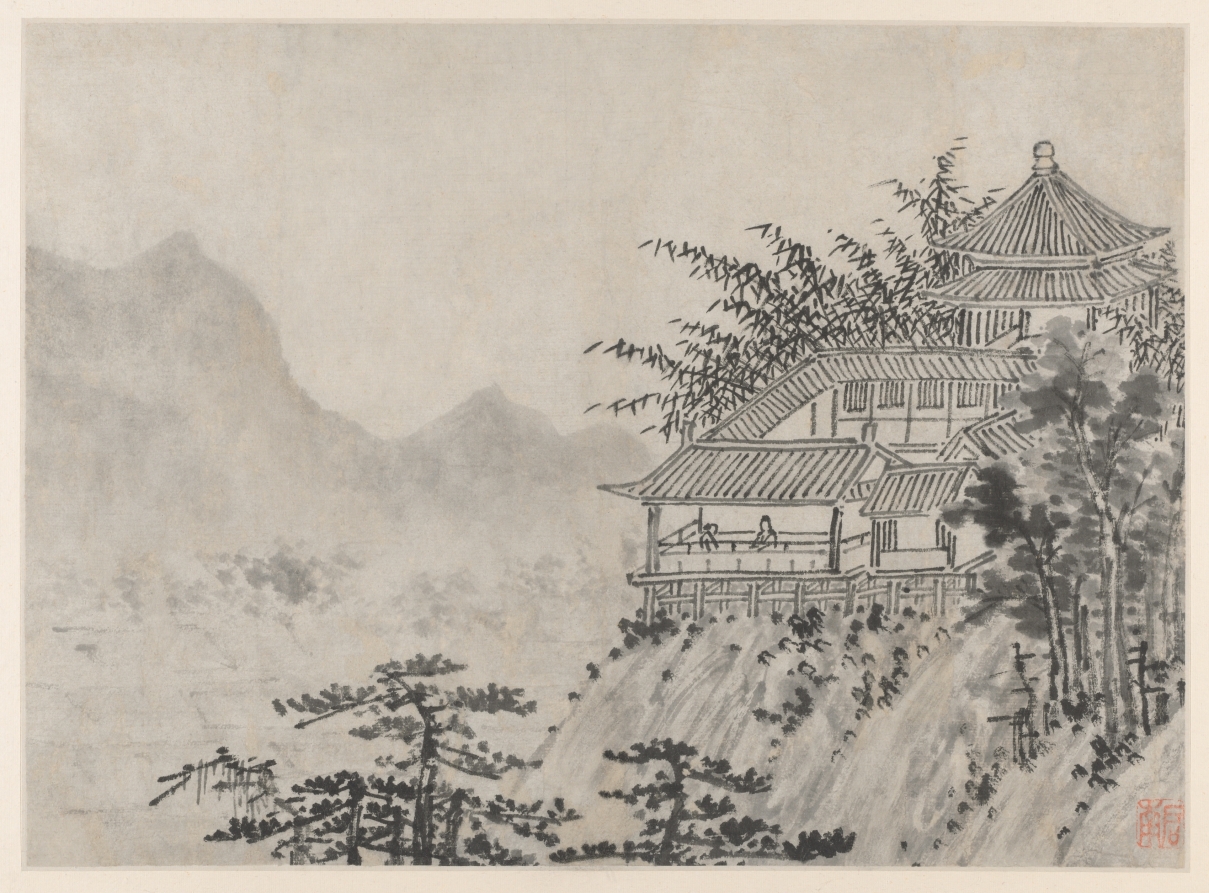 ↗
The Thousand Acres of Clouds, from Twelve Views of Tiger Hill, Suzhou
Shen Zhou
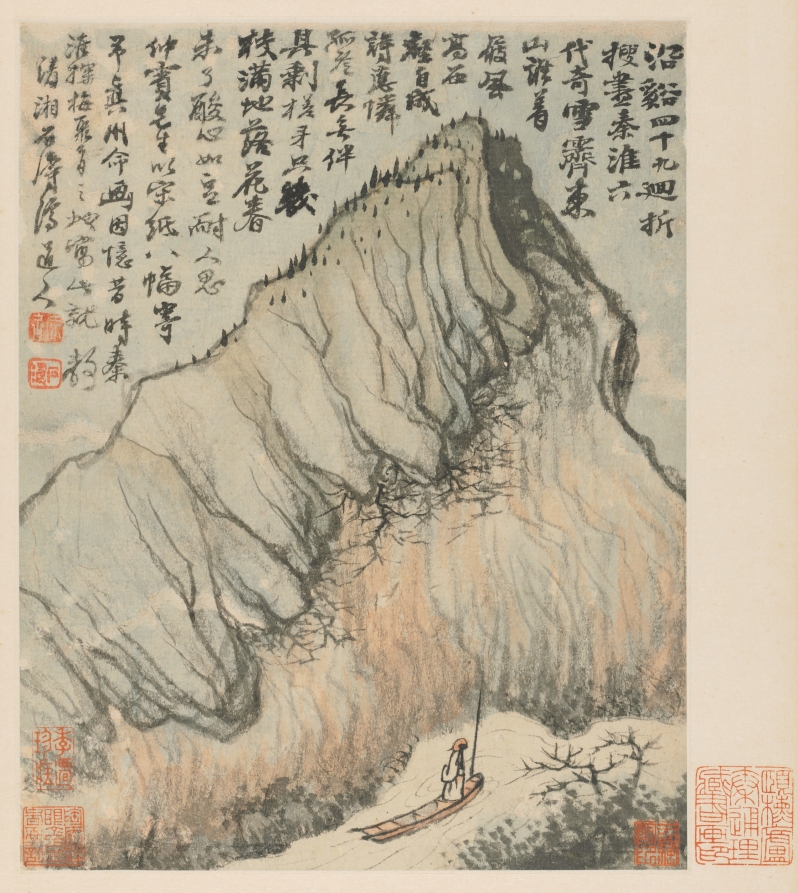 ↗
Reminiscences of Qinhuai River
Shitao
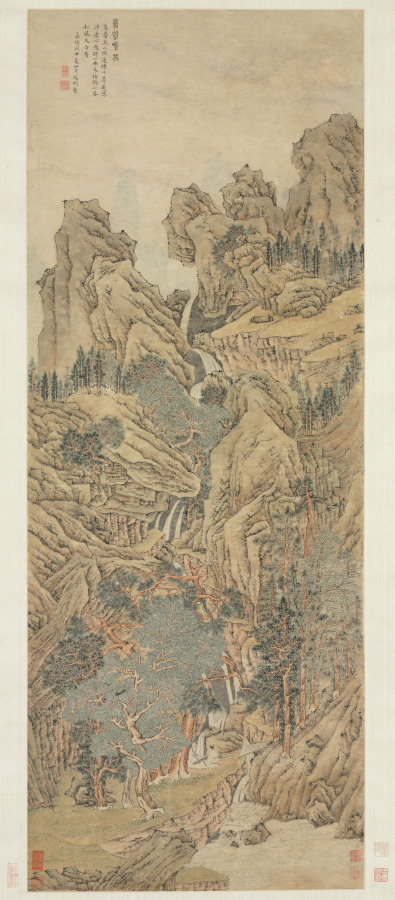 ↗
Playing the Qin in a Secluded Valley
Wen Zhengming