The Kelvin Smith Collection, given by Mrs. Kelvin Smith · The Cleveland Museum of Art
Image: public domain (CC0) · Museum record & image source ↗
Ōmori, from the series Famous Places in the Eastern Capital
- Date
- early 1830s
- Medium
- Color woodblock print
- Dimensions
- Overall: 23.9 x 34.2 cm (9 7/16 x 13 7/16 in.)
- Country / context
- Japan
- Movement / tradition
- Japanese art and printmaking
- Collection
- The Cleveland Museum of Art
- Pathway
- Japanese art and printmaking ↗
Sites around Edo (present-day Tokyo) were popular subjects of ukiyo-e (pictures of the floating world) prints in the early 1800s. The calligraphy in the red circle on the upper right is the title of the series, The Famous Places in the Eastern Capital. The Ōmori district, on Edo Bay a few miles south of Edo, was known for its cultivation of nori, the crackly sheets of seaweed commonly wrapped around rice balls or sushi rolls. Utagawa Kuniyoshi depicted two women gathering seaweed from cultivation beds. One uses chopsticks, while the other gently rakes the seaweed into the baskets in their boat. The tip of another skiff behind the stand of plants on the right and the cultivation beds in the distance suggest the scale and importance of this industry.
Collection text · The Cleveland Museum of Art · CC0Start with what you can see: shapes, surface, colour and scale. How might the listed materials affect the way this object was made and experienced?
Looking prompt · an invitation to observe, not a historical interpretation.Follow a connection.
Explore the tradition ↗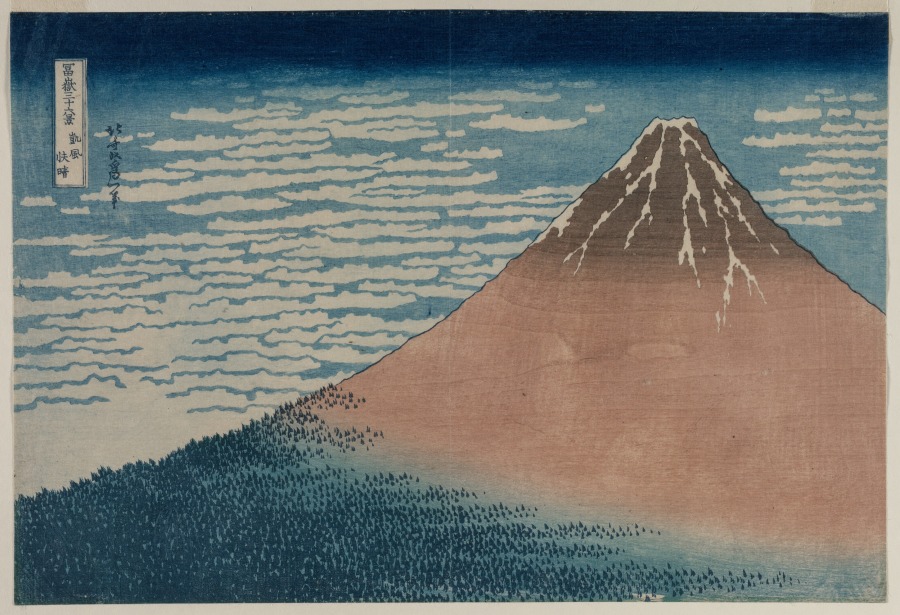 ↗
South Wind, Clear Sky, from Thirty-Six Views of Mount Fuji
Katsushika Hokusai
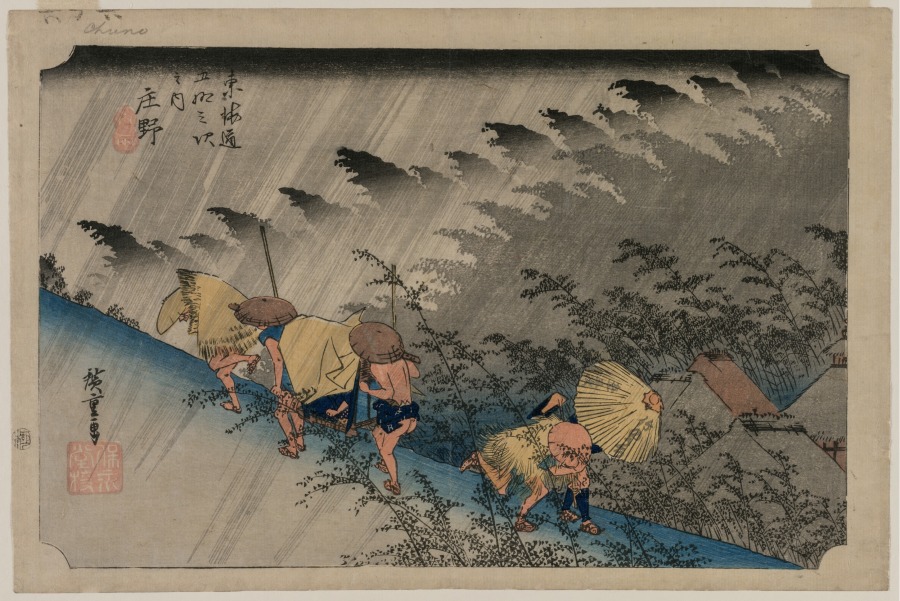 ↗
Driving Rain at Shōno, from Fifty-Three Stations of the Tokaidō
Utagawa Hiroshige
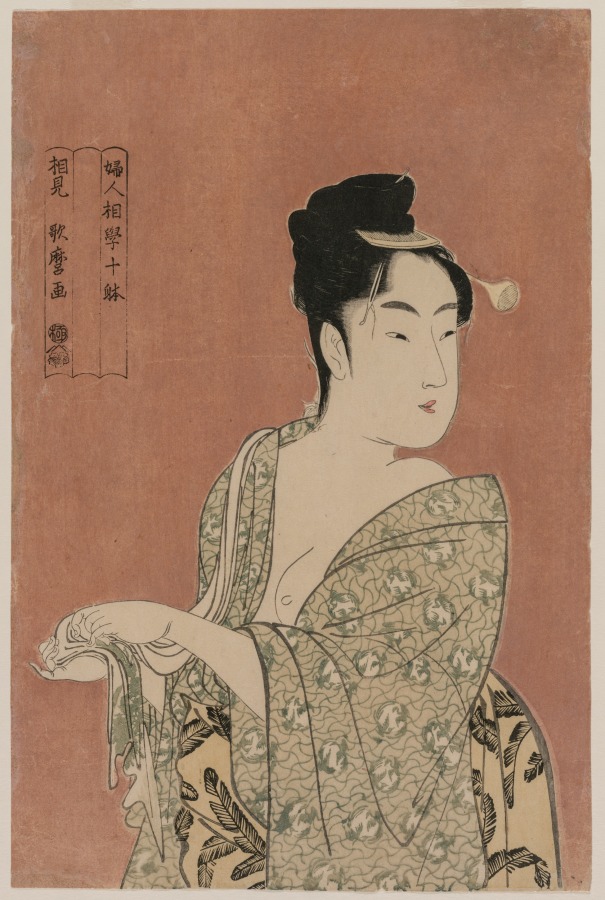 ↗
The Flirtatious Type, from Ten Types in the Physiognomy of Women
Kitagawa Utamaro
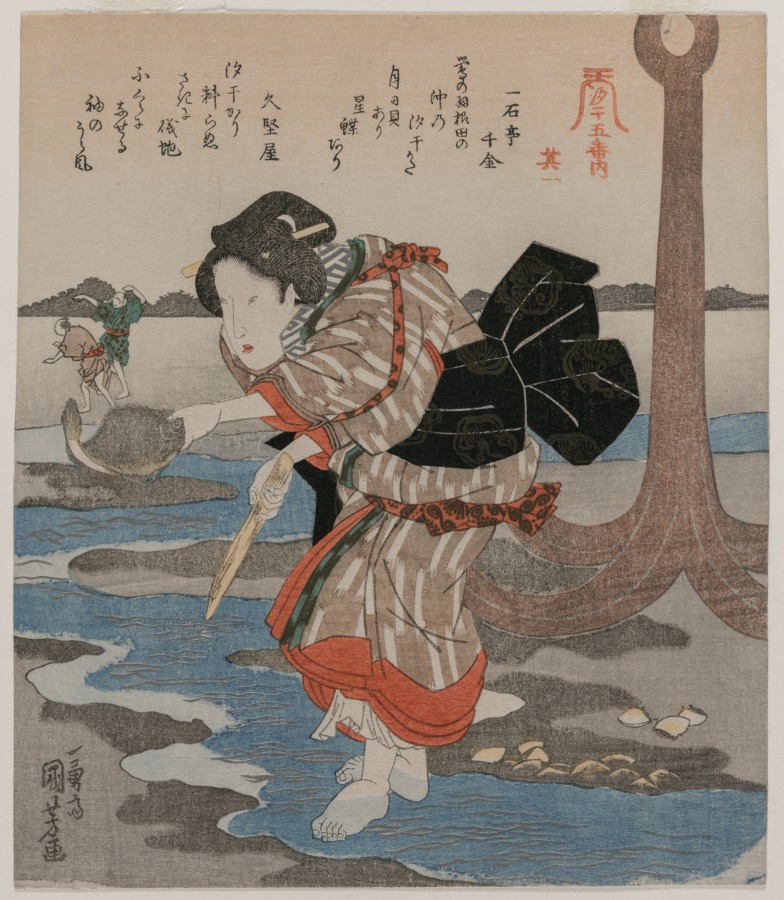 ↗
A Low Tide Pentaptych
Utagawa Kuniyoshi