 ↗
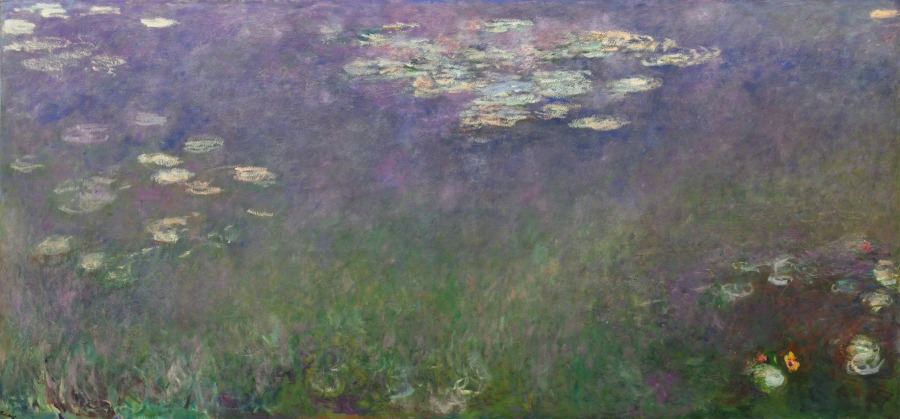
France, late 19th century-early 20th century · c. 1915–26
Water Lilies (Agapanthus)
Claude Monet
Leonard C. Hanna Jr. Fund · The Cleveland Museum of Art
Image: public domain (CC0) · Museum record & image source ↗
The perfectly round form, called a tondo, became popular during the 1440s, especially in Florence. Made for domestic settings instead of churches, the circular format challenged the artist to create a harmonious, balanced composition within this more difficult shape. The attribution has been a matter of debate. Botticelli often collaborated with students, including Filippino Lippi, who would himself become a significant painter. Few specialists have doubted that Botticelli executed the central passages: the delicate modeling of the faces, the graceful poses, the figures’ profound interiority, and the diaphanous veil are the artist’s hallmarks. However, someone else in Botticelli’s studio probably painted Mary’s blue garment, also the most heavily restored part of the painting.
Collection text · The Cleveland Museum of Art · CC0Start with what you can see: shapes, surface, colour and scale. How might the listed materials affect the way this object was made and experienced?
Looking prompt · an invitation to observe, not a historical interpretation.