John L. Severance Fund · The Cleveland Museum of Art
Image: public domain (CC0) · Museum record & image source ↗
probably Turkey, Roman · 1–100 CE
Skyphos
Creator not recorded by the museum
- Date
- 1–100 CE
- Medium
- earthenware with slip decoration
- Dimensions
- Overall: 8.4 x 16.3 x 10.9 cm (3 5/16 x 6 7/16 x 4 5/16 in.)
- Country / context
- Turkey
- Movement / tradition
- Middle Eastern and North African arts
- Collection
- The Cleveland Museum of Art
- Pathway
- Middle Eastern and North African arts ↗
FROM THE MUSEUM
Lead glaze was first used near the Mediterranean basin around 1000 bc, appearing in Mesopotamia and Egypt almost simultaneously. The technique flourished during the Roman Empire, and examples can be found in all reaches of the realm from England and Germany to North Africa, Syria, and Turkey, and perhaps even further east. This is a very fine example of this technique.
Collection text · The Cleveland Museum of Art · CC0A MOMENT TO LOOK
Start with what you can see: shapes, surface, colour and scale. How might the listed materials affect the way this object was made and experienced?
Looking prompt · an invitation to observe, not a historical interpretation.Follow a connection.
Explore the tradition ↗ ↗
Central Andes (Peru), Recuay people · 1–700 CE
Architectural Vessel
Creator not recorded
 ↗
Korea, Joseon dynasty (1392–1910) · 1700s
Jar with Dragon Design
Creator not recorded
 ↗
Pakistan, probably Quetta, Indus Valley Civilization · c. 2800–2500 BCE
Jar with Four Ibex
Creator not recorded
 ↗
Vietnam · 1500s–1600s
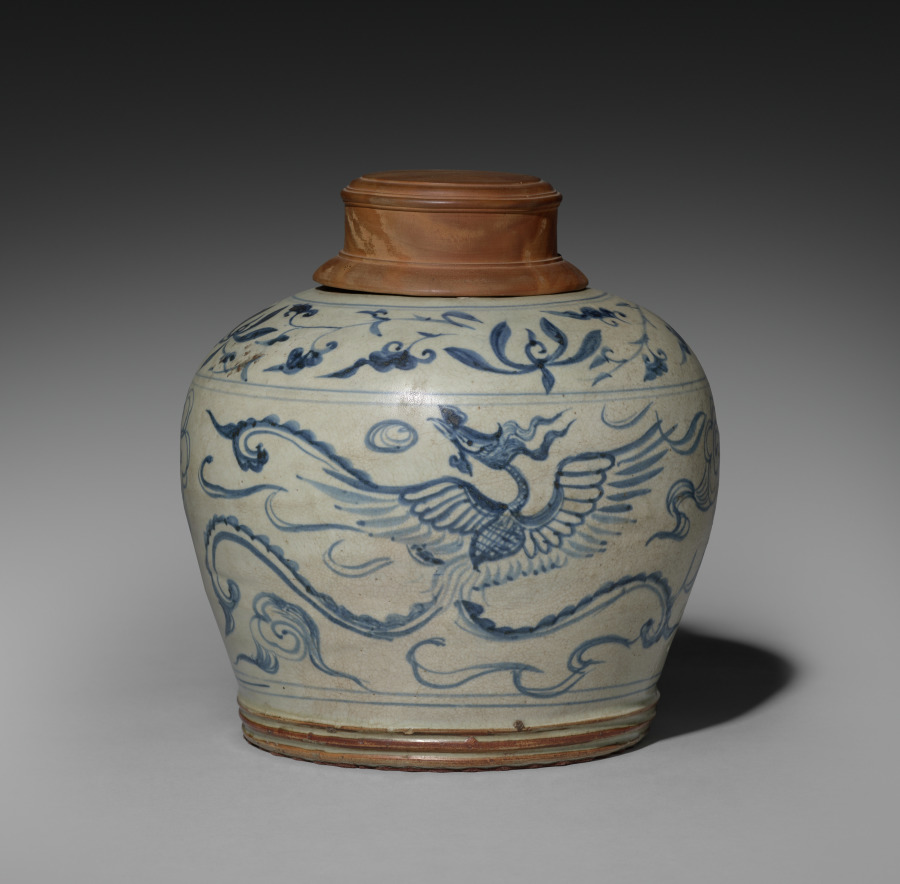
Covered Jar
Creator not recorded