Life and career
Origins and training
Derain grew up in Chatou near Paris and left engineering studies for painting. He shared a studio with Maurice de Vlaminck and studied at the Académie Carrière.
Places, turning points and artistic change
Painting with Henri Matisse at Collioure in 1905 sharpened his bright colour contrasts. London views followed. After military service in the First World War, he increasingly looked to older European painting and more solid figures.
Beyond the studio
His work also included sculpture and illustrated books. The later return to tradition matters: Fauvism was one phase of his career, not a description of everything he made.
Works across a career
Selected examples, not a complete catalogue. Read date ranges and attributions before inferring a career sequence.
Reading the selected works together
Compare the exaggerated colour of the figure with the Thames views and the more constructed Church of Chatou; this selection concentrates on his early changes.
- 01
1906
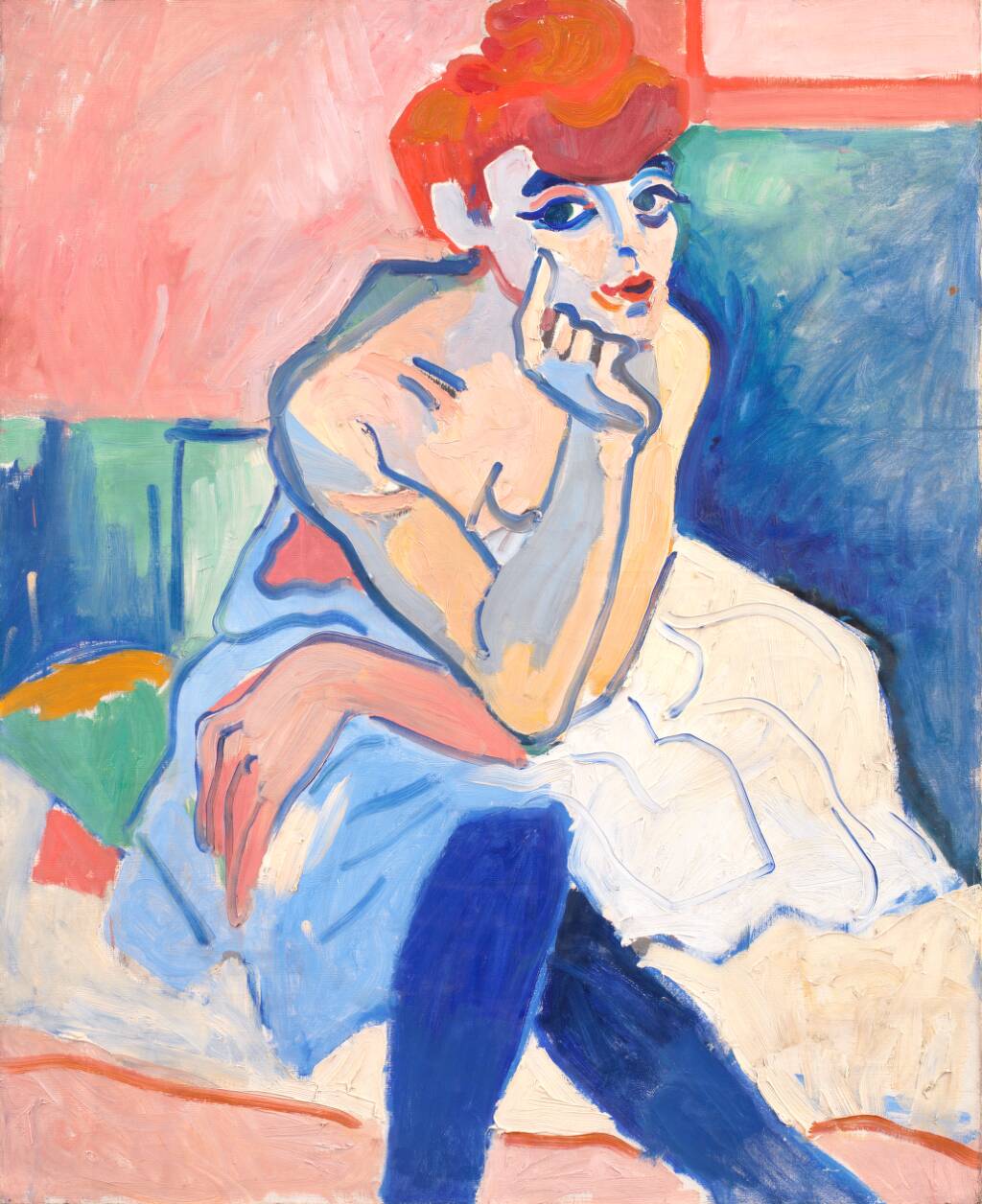 Explore artwork ↗
1906
Woman in a Chemise
- Material / technique
- Oil on canvas
- Attribution / role
- See the museum attribution
- Collection / source
- SMK — National Gallery of Denmark
Artist-wide context
Red, blue and orange can describe a place through their contrast, without copying its actual colours.
· Public Domain - 02
1906
1906
Waterloo Bridge
- Material / technique
- Painting
- Attribution / role
- See the museum attribution
- Collection / source
- Thyssen-Bornemisza — André Derain
Colour separates the river, bridge and city without copying local colours.
- 03
1909
1909
The Church of Chatou
- Material / technique
- Painting
- Attribution / role
- See the museum attribution
- Collection / source
- Thyssen-Bornemisza — André Derain
A useful comparison with the freer, brighter Fauvist pictures.
Materials, marks and colour
Media and surface
Early oil paint can remain visibly dabbed onto a light ground.
Marks and structure
Separated strokes give early landscapes a mosaic-like rhythm; later forms become more settled.
Palette and light
Early saturated contrasts give way to more restrained, earthy combinations in later work.