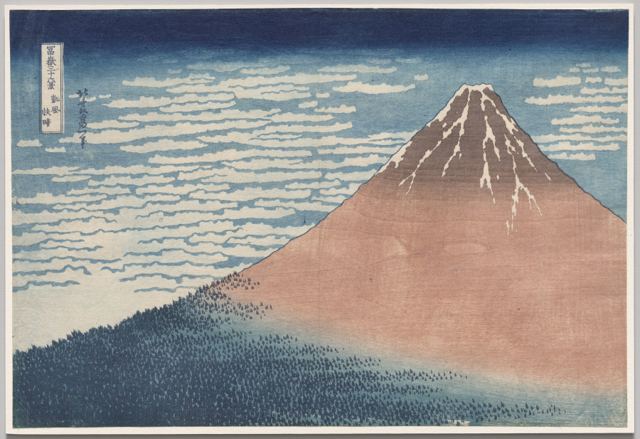
 ↗
Japan, Edo period (1615–1868) · early 1830s
South Wind, Clear Sky, from Thirty-Six Views of Mount Fuji
Katsushika Hokusai
Bequest of Edward L. Whittemore · The Cleveland Museum of Art
Image licence: CC0 · Museum record & image source ↗
Nakanochō was the main street in Yoshiwara, a famous walled pleasure district that housed as many as 4,000 courtesans. In the early evening, elaborately dressed courtesans accompanied by attendants promenaded on the central thoroughfare, as in this scene. The open buildings with shop curtains hanging from their eaves are teahouses, establishments where men could arrange appointments with courtesans of the more prestigious brothels.
Collection text · The Cleveland Museum of Art · CC0Follow the shift from a procession around 1790 to the tense theatrical confrontation of 1797 and the broad riverside gathering of 1811. Colour prints can isolate a recognisable actor or distribute attention across many figures. Multi-sheet format changes how the eye travels without changing the basic relief-printing process.
Artist-wide context; individual works may differ.
Commercial woodblock designs were realised with publishers, carvers and printers.
Recognisable poses, patterned costume and stage-like groupings identify actors and fashionable types.
Printed colour patterns articulate clothing and status rather than reproduce every optical effect.
Start with what you can see: shapes, surface, colour and scale. How might the listed materials affect the way this object was made and experienced?
Looking prompt · an invitation to observe, not a historical interpretation.↗Katsushika Hokusai
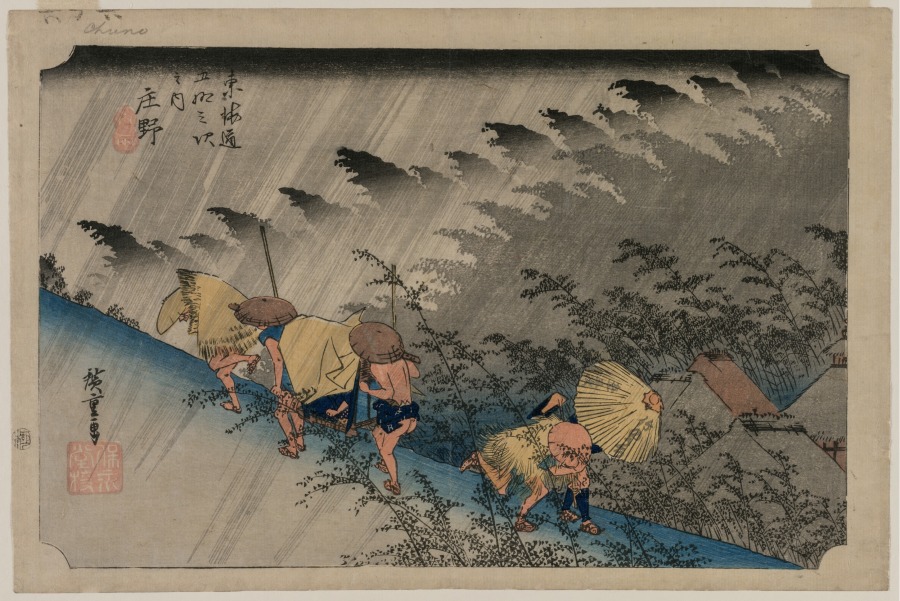 ↗
Utagawa Hiroshige
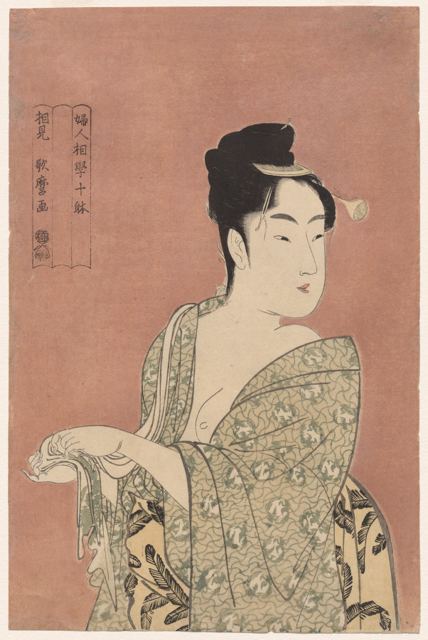 ↗
Kitagawa Utamaro
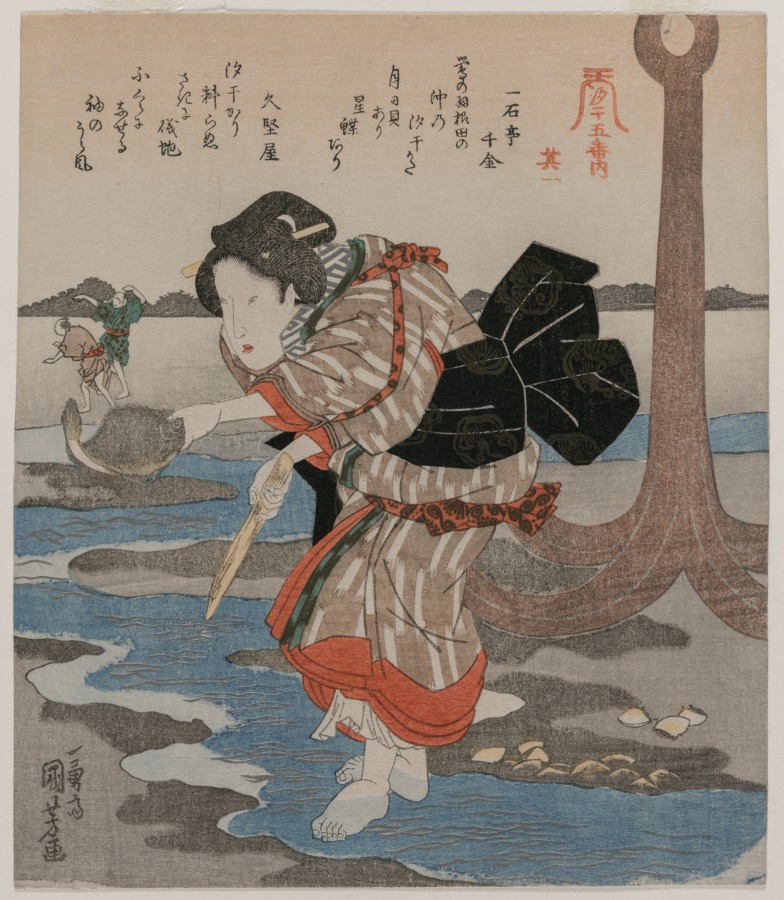 ↗
Utagawa Kuniyoshi