 ↗
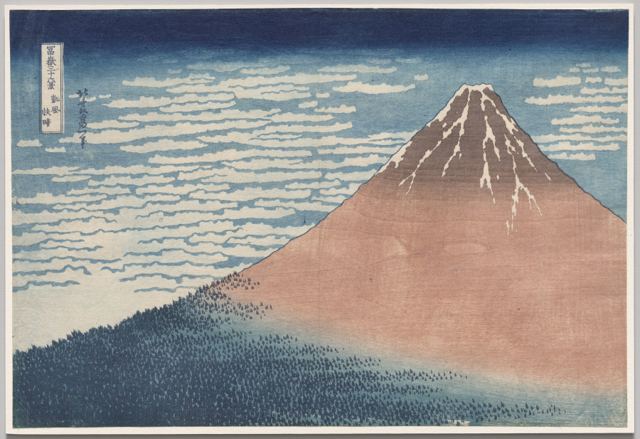
Japan, Edo period (1615–1868) · early 1830s
South Wind, Clear Sky, from Thirty-Six Views of Mount Fuji
Katsushika Hokusai
Gift of Mrs. Ralph King · The Cleveland Museum of Art
Image licence: CC0 · Museum record & image source ↗
Gomeirō is another name for the fashionable teahouse Ōgi-ya (House of Fans) in the Yoshiwara district of Edo (present-day Tokyo). Two courtesans, each attended by a geisha and a shinzō (apprentice to a courtesan) view a full autumn moon as it rises over the surrounding paddy fields. The elegance of the women's flowing robes and the serenity of the evening with a full silver moon contribute to the poetic atmosphere of this surimono, a privately commissioned print usually accompanied by text—here, a poem, which reads:What liveliness! Geisha, shinzō, and jesters fill the room, all guests of the moon.
Collection text · The Cleveland Museum of Art · CC0Compare the intimate figures and balcony setting of the 1799 print with Red Fuji’s large, simplified mountain and restricted colour contrasts. The later poetry print returns to narrative through a more expansive landscape. All three are collaborative colour woodblocks: a change of subject or scale does not necessarily mean a change of medium.
Artist-wide context; individual works may differ.
Colour woodblocks build images through registered impressions from separately inked blocks.
Decisive contours and large simplified shapes organise figures, waves and mountains.
Restricted colour contrasts and unprinted paper can create depth without continuous modelling.
Start with what you can see: shapes, surface, colour and scale. How might the listed materials affect the way this object was made and experienced?
Looking prompt · an invitation to observe, not a historical interpretation.↗Katsushika Hokusai
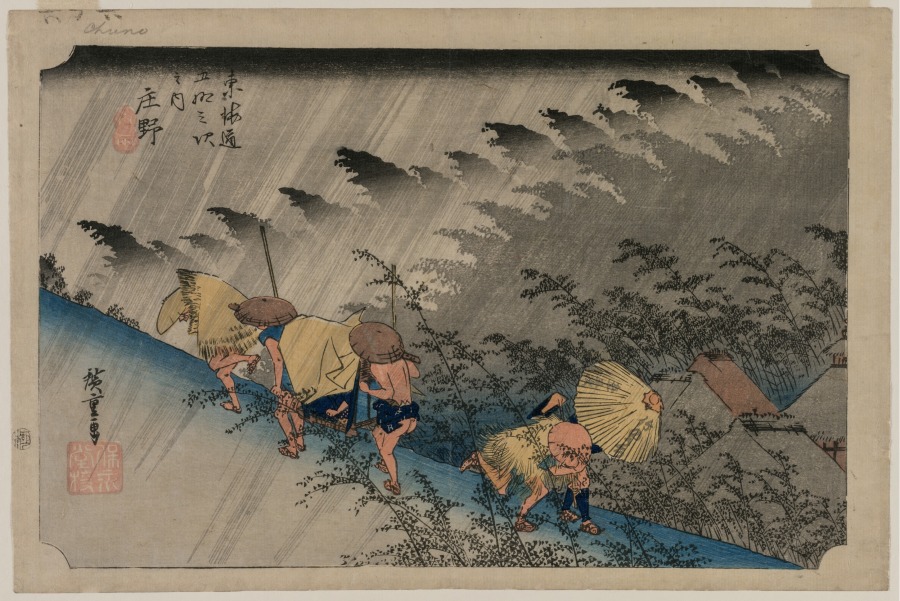 ↗
Utagawa Hiroshige
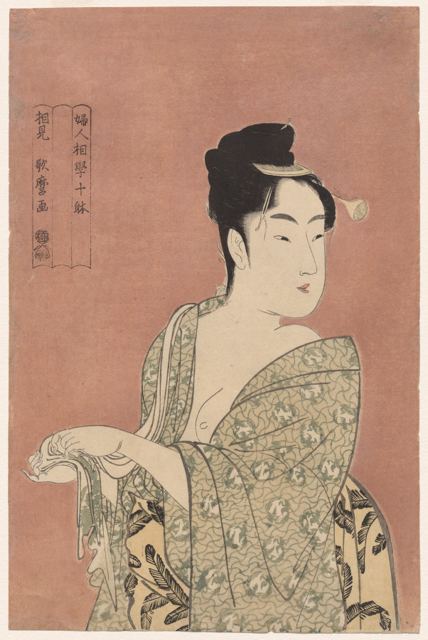 ↗
Kitagawa Utamaro
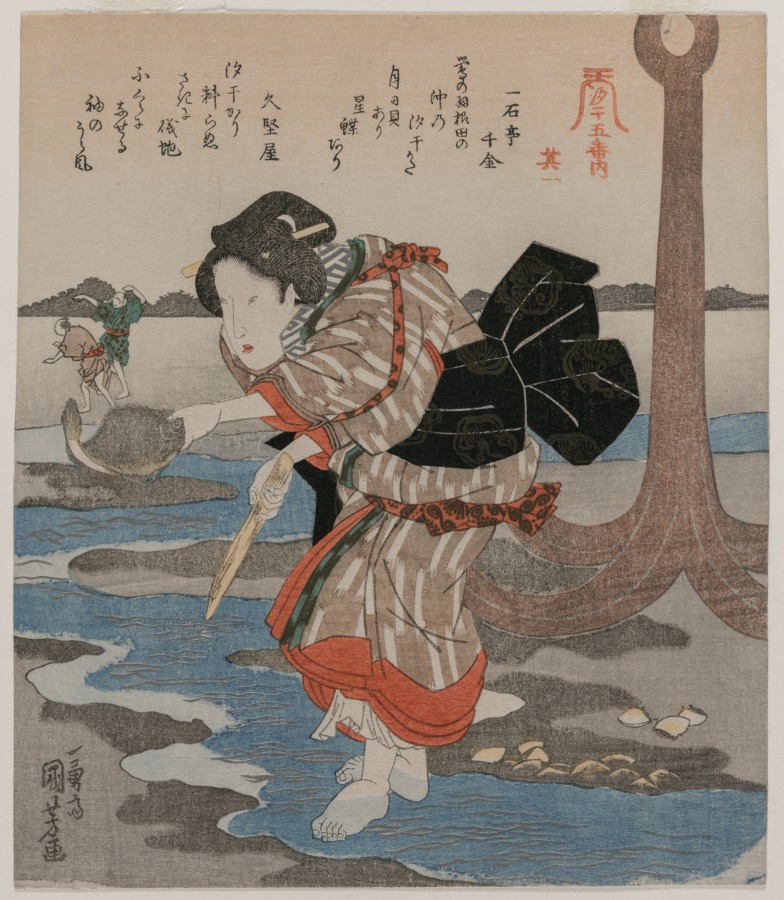 ↗
Utagawa Kuniyoshi