 ↗
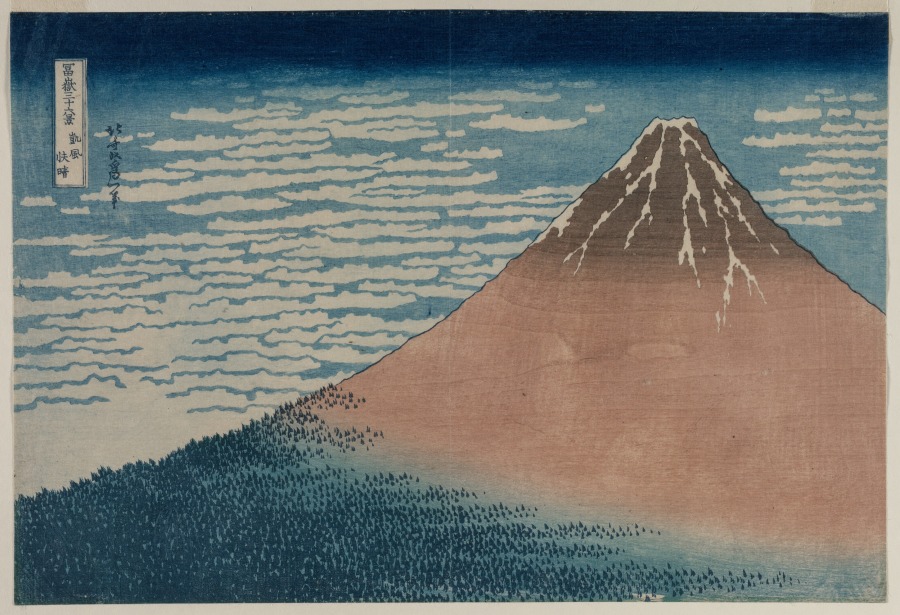
Japan, Edo period (1615–1868) · early 1830s
South Wind, Clear Sky, from Thirty-Six Views of Mount Fuji
Katsushika Hokusai
Gift of the Hanna Fund · The Cleveland Museum of Art
Image: public domain (CC0) · Museum record & image source ↗
These screens recall a painting style so closely identified with Ogata Kōrin (1658–1716) that it is called Rinpa, or “Rin School,” after the ideograph “rin” in his name. The highly stylized background accentuates floral groupings that have been groomed so as to appear utterly artificial, like the synthetic arrangements available today. Kōrin's genius derived in large measure from natural phenomena painstakingly observed and then manipulated to create compositions of startling refinement and sparkling isolation. This process may have grown out of Kōrin's early immersion in the family textile business, a medium that encourages such dramatic distillations of form: the stream's gold-crested waves bring to mind traditional kimono robe designs of Kōrin's era. Works with the signature seen on this painting, including a style name, or persona suggested to Kōrin by his brother Kenzan (1663–1743), are sometimes considered to have been produced either in the last year of his life, when he was very ill, or after his death. In both scenarios, the lion’s share of the work would have been done by studio assistants, but little is truly known of his studio practice. Given the regularity of the gold waves on the stream, and the tension in the arrangement of the chrysanthemums, it is also possible that the screens were made in emulation of Kōrin's designs by a later artist.
Collection text · The Cleveland Museum of Art · CC0Start with what you can see: shapes, surface, colour and scale. How might the listed materials affect the way this object was made and experienced?
Looking prompt · an invitation to observe, not a historical interpretation.↗Katsushika Hokusai
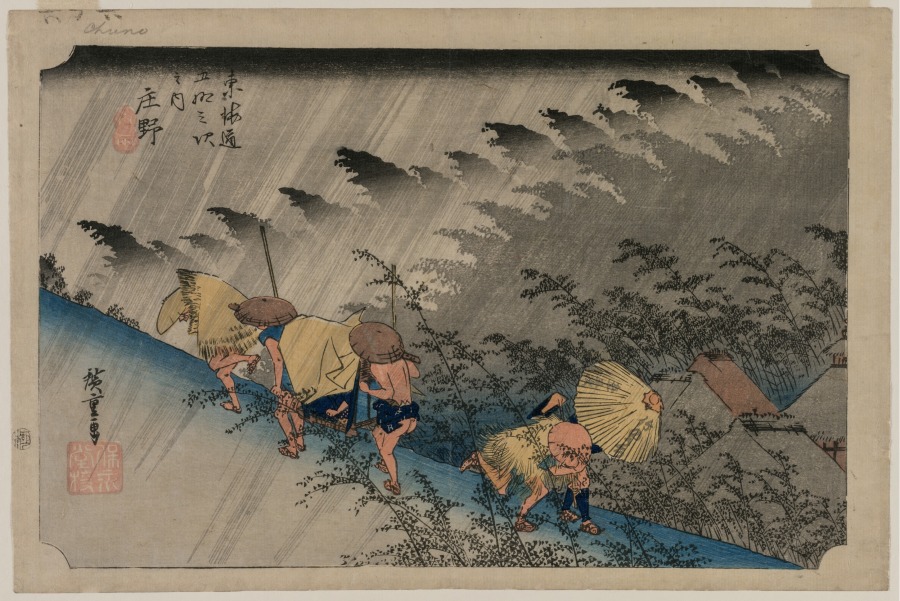 ↗
Utagawa Hiroshige
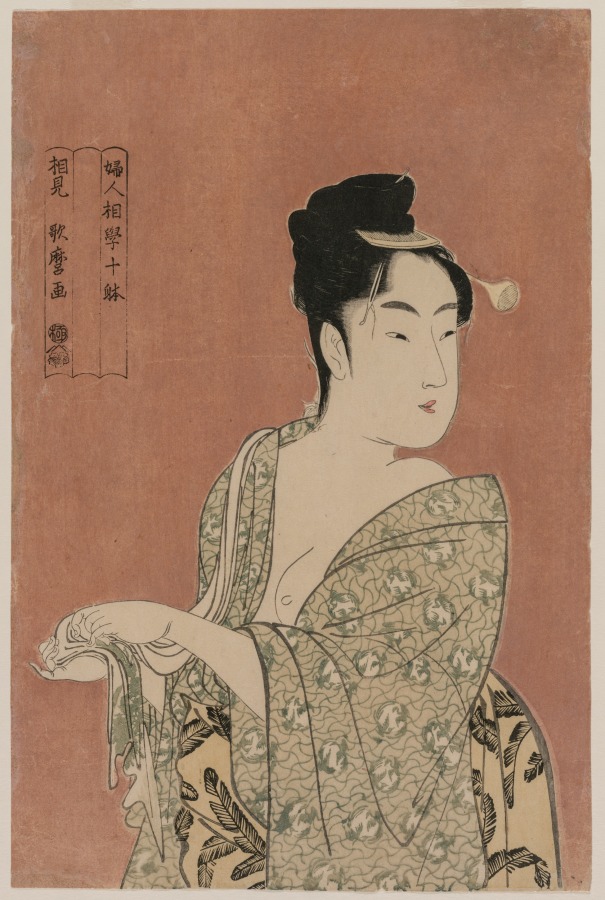 ↗
Kitagawa Utamaro
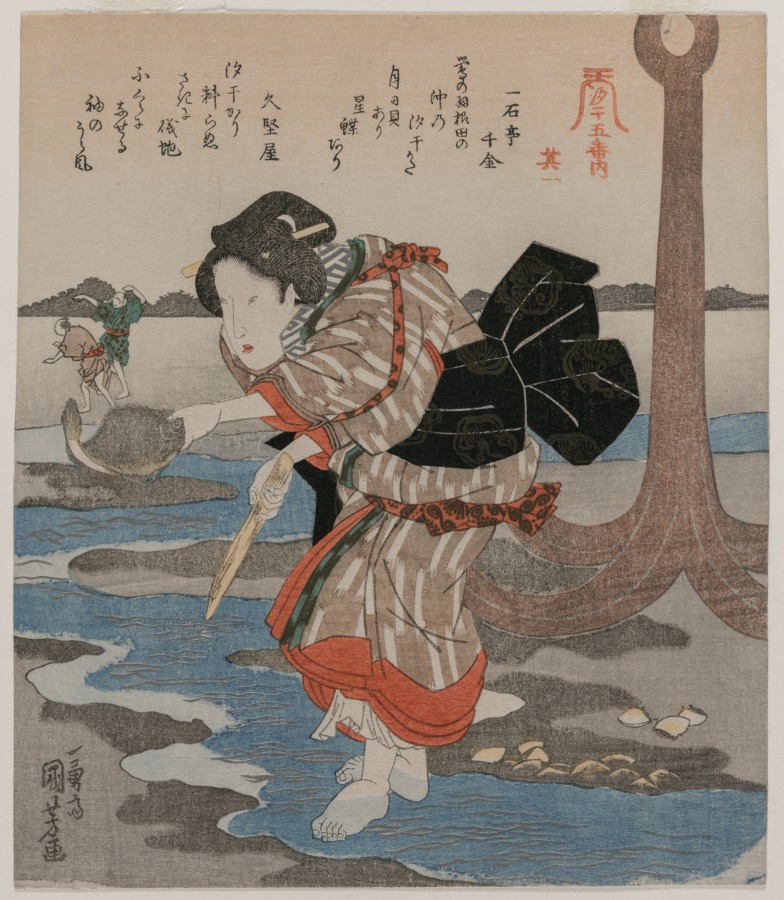 ↗
Utagawa Kuniyoshi