 ↗
Netherlands · 1890
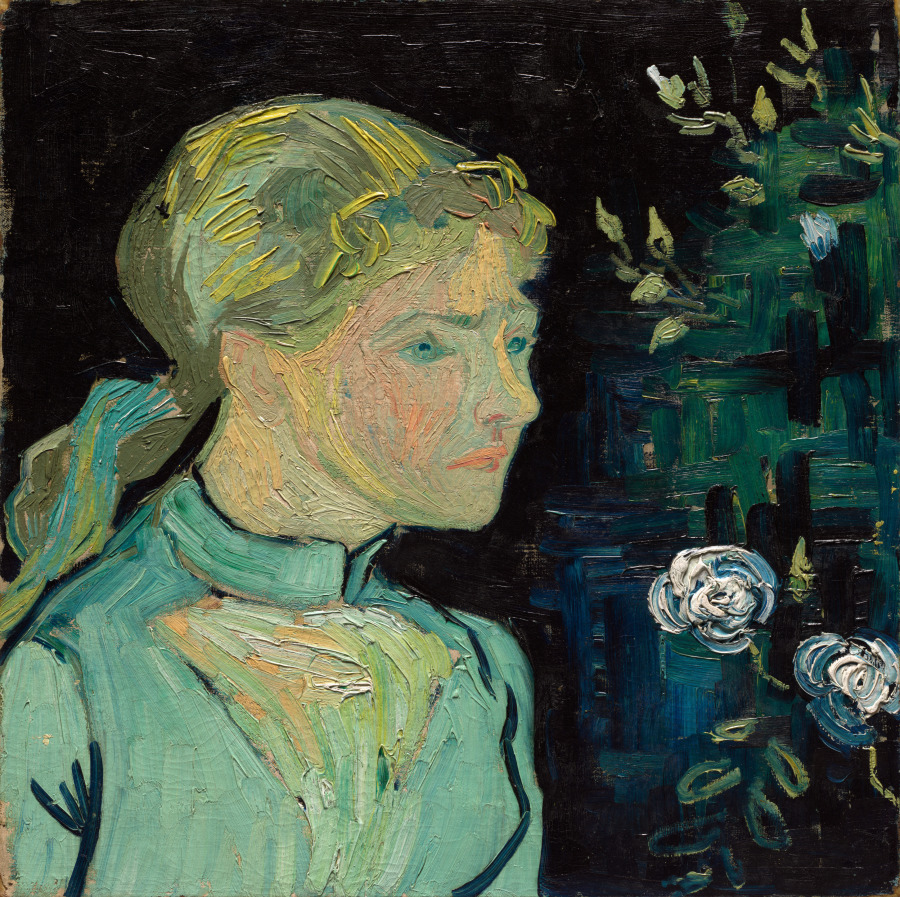
Adeline Ravoux
Vincent van Gogh
#656164#4D5447#7B7A81#6E706F#69696C#989595Estimated from six colour groups in the museum image, including visible paper or borders. Reproduction and lighting affect the result; these are image-area proportions, not pigment measurements.
John L. Severance Fund and an anonymous gift · The Cleveland Museum of Art
Image: public domain (CC0) · Museum record & image source ↗
A skilled horticulturalist as well as an artist, Claude Monet spent the last 30 years of his life painting the private garden he designed and helped cultivate at his home in Giverny in northern France. The resultant canvases are notable for their varied motifs, formats, and sizes. Monumental in scale, this rendering of his water lily pond focuses on the momentary effects of sunlight as it both penetrates and reflects off its shimmering surface. By zeroing in on the water and omitting its horizon and surrounding banks, Monet infers a limitless expanse—a perception amplified by the painting’s vast horizontal format that fills the viewer’s field of vision.
Collection text · The Cleveland Museum of Art · CC0Start with what you can see: shapes, surface, colour and scale. How might the listed materials affect the way this object was made and experienced?
Looking prompt · an invitation to observe, not a historical interpretation.