 ↗
Japan, Edo period (1615–1868) · late 1790s
Cherry Blossoms in the Wind
Utagawa Toyokuni
#DAC0A7#DFC5AB#BBA18A#D1B79E#D6BBA2#E6CCB2Estimated from six colour groups in the museum image, including visible paper or borders. Reproduction and lighting affect the result; these are image-area proportions, not pigment measurements.
John L. Severance Fund by exchange · The Cleveland Museum of Art
Image licence: CC0 · Museum record & image source ↗
Bamboo and orchids are motifs associated with the virtues of the scholar-official. Bamboo that bends but does not break stands for moral integrity, endurance, and loyalty. Wild, fragrant orchids that bloom in the shadow symbolize modesty and the aura of learnedness. Rocks are often considered to be miniature versions of mountains that form the universe. This monochrome ink painting is brushed on paper in a masterfully calligraphic manner. While the rocks are delineated in chalky, dry strokes showing the effect of flying white (feibai), the bamboo and orchids are drawn with a swift brush demonstrating the virtuosity of the artist.
Collection text · The Cleveland Museum of Art · CC0The coloured silk fan contrasts with the ink-on-paper handscrolls. In Twin Pines, contour and dry brush make landscape behave like a language of calligraphic signs. Compare compact colour, extended viewing and exposed paper. The broad date assigned to the bamboo-and-orchid scroll prevents treating it as securely earlier or later than the dated examples.
Artist-wide context; individual works may differ.
Ink on paper and colour on silk preserve different relationships between brush and support.
Calligraphic contour, dry brush and historical reference make painting a learned visual language.
Restrained colour or pure ink shifts attention toward rhythm, spacing and the expressive edge of a mark.
Start with what you can see: shapes, surface, colour and scale. How might the listed materials affect the way this object was made and experienced?
Looking prompt · an invitation to observe, not a historical interpretation.↗Utagawa Toyokuni
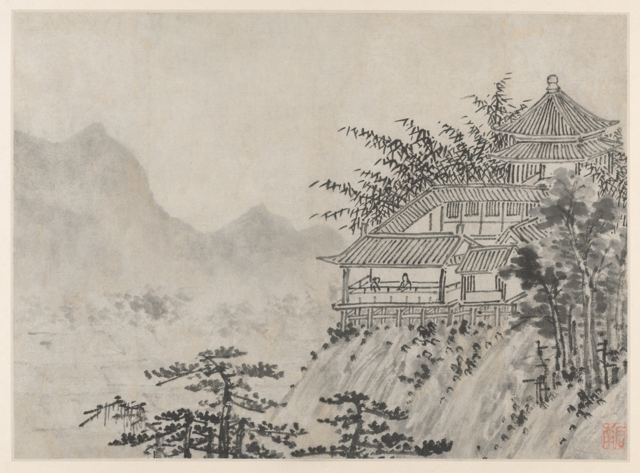 ↗
Shen Zhou
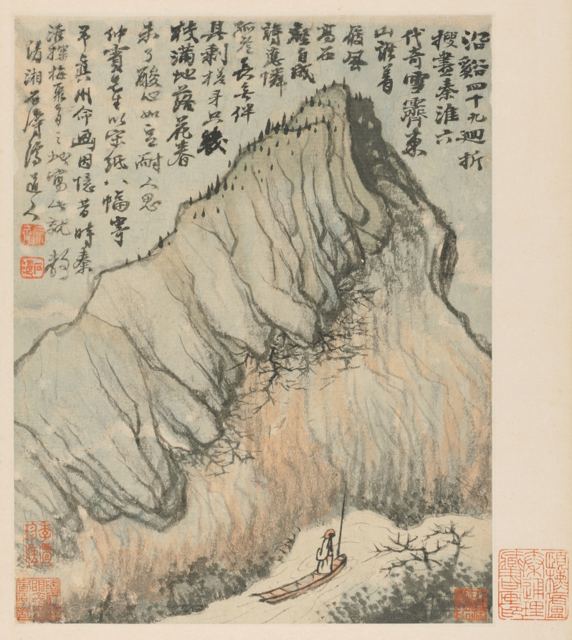 ↗
Shitao
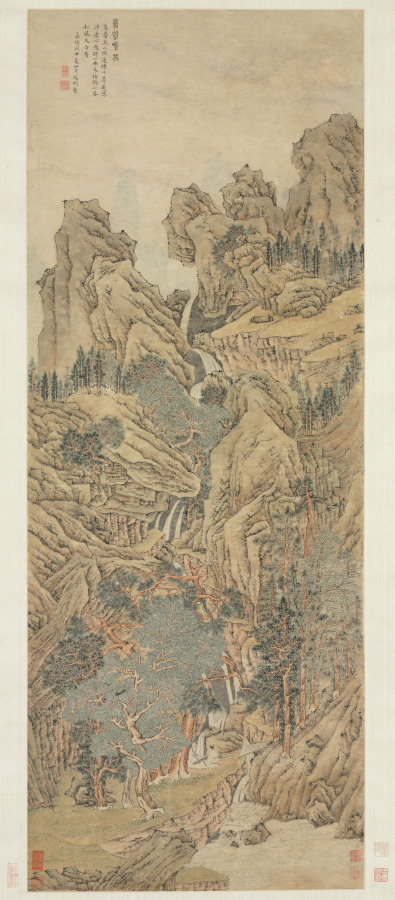 ↗
Wen Zhengming