 ↗
Japan, Edo period (1615–1868) · late 1790s
Cherry Blossoms in the Wind
Utagawa Toyokuni
#C8C2B7#D2CBC0#85817B#DCD6CB#D6CFC4#EBE5D7Estimated from six colour groups in the museum image, including visible paper or borders. Reproduction and lighting affect the result; these are image-area proportions, not pigment measurements.
John L. Severance Fund · The Cleveland Museum of Art
Image licence: CC0 · Museum record & image source ↗
A poem by the influential Wen Zhengming from Suzhou in southeastern China expresses Wen’s gratitude to the Jiajing emperor (reigned 1522–67) for a gift of embroidered silk bestowed in appreciation of his commendable service. The elegant, well-composed, and energetically written large characters in deep black ink reflect the handwriting of a distinguished scholar-artist. Works of calligraphy by Wen of this large scale are rare.The poem reads:As I expressed my gratitude to His Majesty by the Goldwater Bridge. This heavenly silk is embroidered with five colors.Resplendent it is, draping over my arm with [designs of] twin dragons.Having received such a gift, I [bowed] in shame over my lack of achievements. Humbly I returned to my rank to observe the grand ceremony.I wish His Majesty shall live on for myriad years,And the sun will always shine upon His trailing robe.
Collection text · The Cleveland Museum of Art · CC0Begin with the controlled script of the court-related poem around 1525, then examine the late-1530s pine and the 1551 wintry trees. A change from written characters to landscape does not abandon calligraphic rhythm. Compare fine and forceful lines, ink tonalities and the restrained role of colour.
Artist-wide context; individual works may differ.
Painting and calligraphy share ink, brush and paper-based working methods.
Fine controlled lines coexist with dense, rhythmic trees and rocks built through repeated marks.
Restrained colour leaves ink gradation, spacing and unpainted areas structurally important.
Start with what you can see: shapes, surface, colour and scale. How might the listed materials affect the way this object was made and experienced?
Looking prompt · an invitation to observe, not a historical interpretation.↗Utagawa Toyokuni
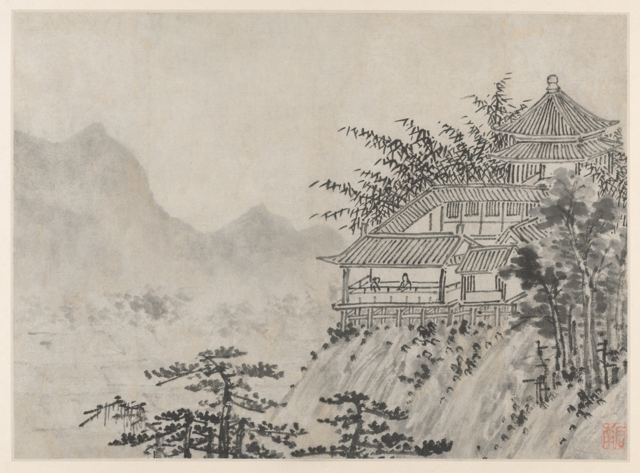 ↗
Shen Zhou
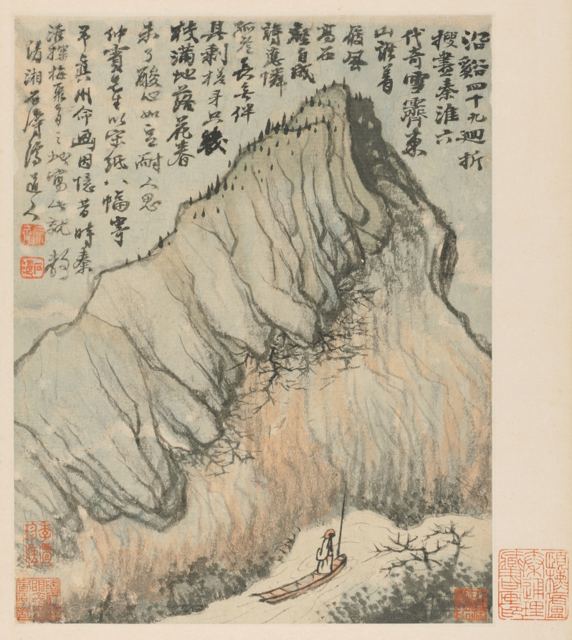 ↗
Shitao
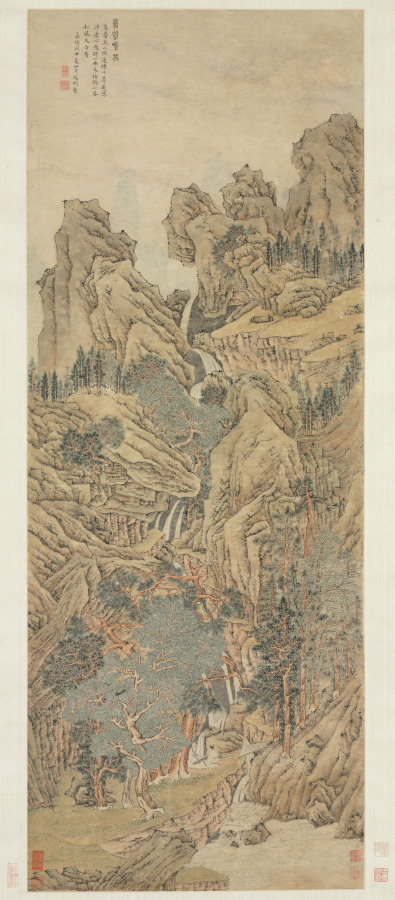 ↗
Wen Zhengming