 ↗
Japan, Edo period (1615–1868) · late 1790s
Cherry Blossoms in the Wind
Utagawa Toyokuni
#E0C8A3#E7D1AD#E3CDA7#C0A687#E6CEA9#EEDAB7Estimated from six colour groups in the museum image, including visible paper or borders. Reproduction and lighting affect the result; these are image-area proportions, not pigment measurements.
Ex coll.: C. C. Wang Family, Gift of The Dillon Fund, 1973 · The Metropolitan Museum of Art
Image licence: CC0 · Museum record & image source ↗
Ink on paper and the horizontal handscroll format shape how this landscape is encountered. The Met dates the work to around 1310; a continuous landscape can unfold through successive sections rather than a single fixed view.
Original educational overview · based on the linked museum recordThe coloured silk fan contrasts with the ink-on-paper handscrolls. In Twin Pines, contour and dry brush make landscape behave like a language of calligraphic signs. Compare compact colour, extended viewing and exposed paper. The broad date assigned to the bamboo-and-orchid scroll prevents treating it as securely earlier or later than the dated examples.
Artist-wide context; individual works may differ.
Ink on paper and colour on silk preserve different relationships between brush and support.
Calligraphic contour, dry brush and historical reference make painting a learned visual language.
Restrained colour or pure ink shifts attention toward rhythm, spacing and the expressive edge of a mark.
Start with what you can see: shapes, surface, colour and scale. How might the listed materials affect the way this object was made and experienced?
Looking prompt · an invitation to observe, not a historical interpretation.↗Utagawa Toyokuni
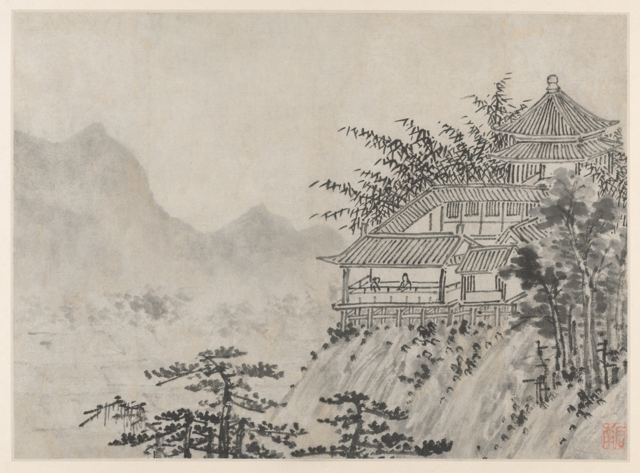 ↗
Shen Zhou
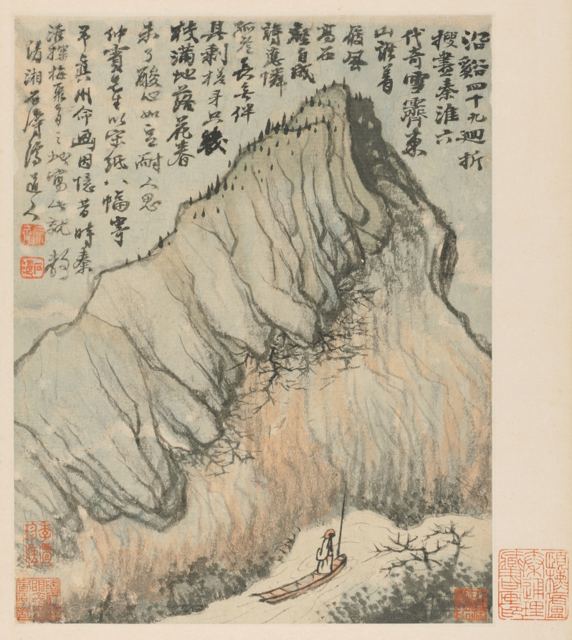 ↗
Shitao
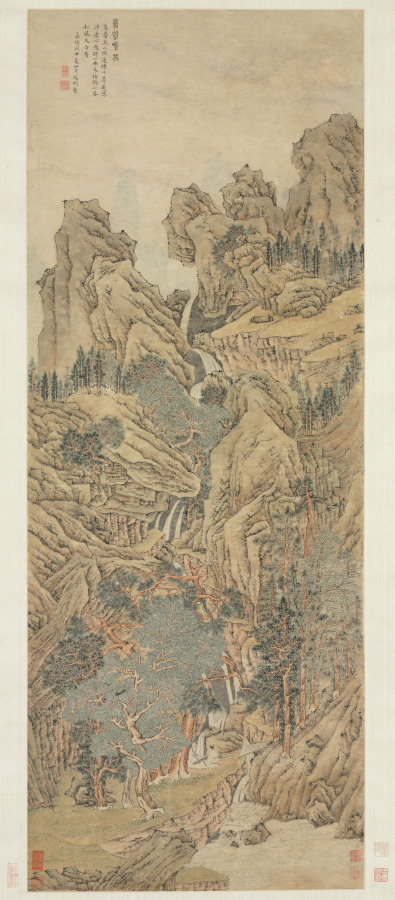 ↗
Wen Zhengming