Life and career
Origins and training
Horta trained as an architect and became a leading figure in Brussels Art Nouveau. His work needs to be understood as building and design, not primarily painting.
Places, turning points and artistic change
The 1890s houses joined iron, glass, open spaces and curling decoration. His later Palais des Beaux-Arts used a more monumental, restrained architectural language.
Beyond the studio
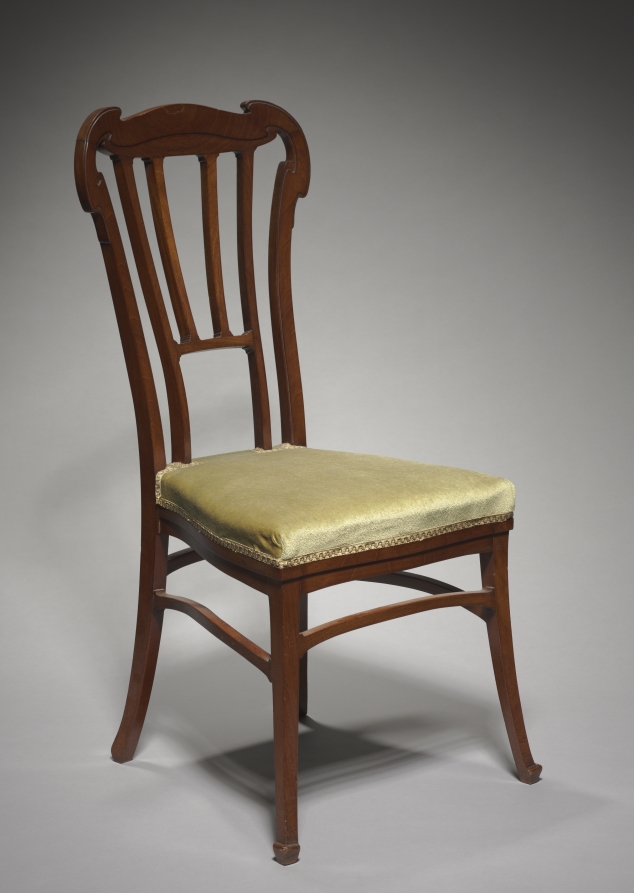
Furniture, fittings and light were part of the same project as the building. The later demolition of some major commissions also makes preservation part of his legacy.
Works across a career
Selected examples, not a complete catalogue. Read date ranges and attributions before inferring a career sequence.
Reading the selected works together
Compare a chair with two houses: the scale changes, but structure and decorative line remain connected.
- 01
1893–94
1893–94
Hôtel Tassel
- Material / technique
- Architecture
- Attribution / role
- See the museum attribution
- Collection / source
- UNESCO
An early house where circulation, iron structure and light shape the interior together.
- 02
1898–1901
1898–1901
Horta House and Studio
- Material / technique
- Architecture and interior design
- Attribution / role
- See the museum attribution
- Collection / source
- Horta Museum
His own working and domestic spaces formed a carefully connected whole.
- 03
c. 1900
 Explore artwork ↗
Materials, marks and colour
Media and surface
Iron, glass, stone and wood work together rather than as separate decoration.
Marks and structure
Curved supports and railings continue through rooms and stairs.
Palette and light
Daylight and reflective surfaces matter more here than a painter’s pigment palette.