 ↗
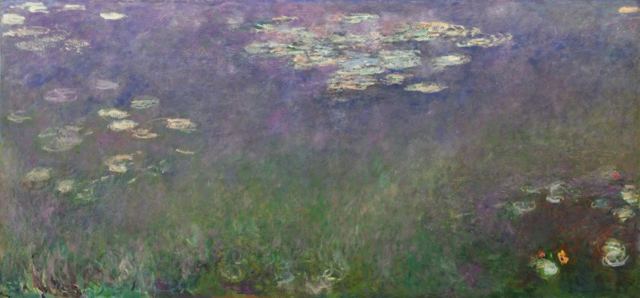
France, late 19th century-early 20th century · c. 1915–26
Water Lilies (Agapanthus)
Claude Monet
Dudley P. Allen Fund · The Cleveland Museum of Art
Image licence: CC0 · Museum record & image source ↗
Encouraged by the Impressionist Mary Cassatt and the poet Stéphane Mallarmé, Morisot experimented with printmaking between 1887 and 1889. In this drypoint, a technique in which a sharp tool is used to scratch lines onto a copper plate, Morisot looks directly at the viewer—as if drawing our portrait—while 11-year-old Julie observes her mother at work.
Collection text · The Cleveland Museum of Art · CC0In Reading, oil colour records reflected light on a white dress. The 1889 drawing lesson redirects attention to making and learning; the 1890 pastel uses a dry, coloured material rather than oil. Compare how clothing, contour and background remain partly unresolved instead of treating every loose mark as unfinished work.
Artist-wide context; individual works may differ.
Oil, drypoint and pastel allow different kinds of openness and revision.
Loose, rapid-looking marks coexist with deliberate framing of figures, clothing and domestic space.
Light fabrics carry reflected colour; pale passages are enlivened by darker, mobile accents.
Start with what you can see: shapes, surface, colour and scale. How might the listed materials affect the way this object was made and experienced?
Looking prompt · an invitation to observe, not a historical interpretation.