 ↗
France, late 19th century-early 20th century · c. 1915–26
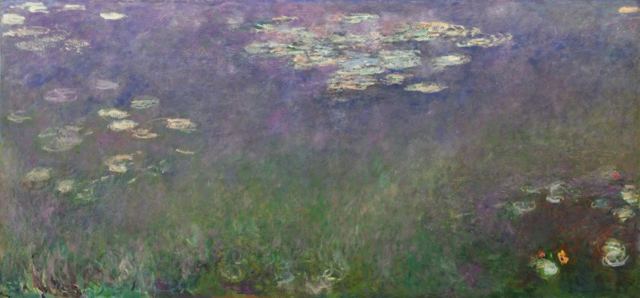
Water Lilies (Agapanthus)
Claude Monet
#393029#6C513C#9FBCBB#613D2D#B2C1B6#989586Estimated from six colour groups in the museum image, including visible paper or borders. Reproduction and lighting affect the result; these are image-area proportions, not pigment measurements.
Small, vivid details detected in the image. These areas are already included in the dominant groups above; their percentages are not added to the total.
#B04D32≈ 0.51%Mr. and Mrs. William H. Marlatt Fund · The Cleveland Museum of Art
Image licence: CC0 · Museum record & image source ↗
Created during the United States Civil War, Winslow Homer’s painting depicts two volunteers for the Union Army who sport their regiment’s highly colorful uniforms, a design discovered to be impractical due to its ability to be spotted by sharpshooters. Passing idle time in their encampment, one soldier holds a lit pipe and watches his companion whittle a block of wood. The painting shares its title with a contemporary poem, in which a soldier smokes a brierwood pipe and daydreams of the time when the conflict will end so he can return home. The museum acquired this painting during World War II, and it seems likely that the painting’s subject was viewed as especially significant for its wartime audience.
Collection text · The Cleveland Museum of Art · CC0The 1864 oil painting builds a human narrative; Leaping Trout exploits watercolour’s transparent washes and rapid accents; the late marine oil makes surf and rock monumental. Compare how the support’s light participates in watercolour, while layered oil can create a denser, more physically resistant surface.
Artist-wide context; individual works may differ.
Oil builds dense surfaces while watercolour uses transparent washes, reserved paper and sharper accents.
Clear masses and forceful diagonals organise people, animals, surf and rock.
Cool water and darker landforms gain force through contrast rather than uniformly high saturation.
Start with what you can see: shapes, surface, colour and scale. How might the listed materials affect the way this object was made and experienced?
Looking prompt · an invitation to observe, not a historical interpretation.