 ↗
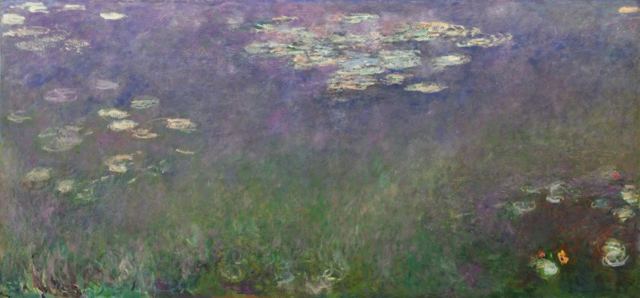
France, late 19th century-early 20th century · c. 1915–26
Water Lilies (Agapanthus)
Claude Monet
#61503F#92745A#A49074#C9B698#756C55#E4D6BEEstimated from six colour groups in the museum image, including visible paper or borders. Reproduction and lighting affect the result; these are image-area proportions, not pigment measurements.
In memory of Ralph King, gift of Mrs. Ralph King; Ralph T. Woods, Charles G. King; and Frances King Schafer · The Cleveland Museum of Art
Image licence: CC0 · Museum record & image source ↗
Sargent was born in Italy, studied in France, and worked chiefly in England, but he never renounced his American citizenship. As a young man, Sargent achieved fame and wealth as a portraitist, but he gradually tired of painting wealthy, superficial aristocrats. In his later years he focused increasingly on watercolor. Along with Winslow Homer, Sargent was the major artist to develop a spontaneous approach toward watercolor. Rather than carefully layering his pigments, he dashed off his paintings in a single sitting, allowing the colors to freely blend together.
Collection text · The Cleveland Museum of Art · CC0Compare the 1898 society portrait with the sunlit watercolour patio and the 1918–19 soldier studies. Oil permits rich, continuous modelling; watercolour makes reserved light and flowing washes conspicuous; graphite and charcoal concentrate on pose. These examples show changing purposes alongside changing materials, rather than portraiture simply giving way to landscape.
Artist-wide context; individual works may differ.
Oil portraits, travel watercolours and figure drawings serve distinct commissions and working purposes.
Economical, assured marks can suggest fabric or bodily weight without detailing every edge.
Contrasts of bright light and shadow organise surfaces; watercolour often preserves the paper’s luminosity.
Start with what you can see: shapes, surface, colour and scale. How might the listed materials affect the way this object was made and experienced?
Looking prompt · an invitation to observe, not a historical interpretation.