 ↗
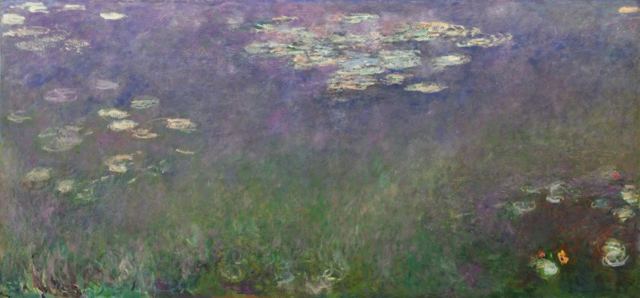
France, late 19th century-early 20th century · c. 1915–26
Water Lilies (Agapanthus)
Claude Monet
Purchase from the J. H. Wade Fund · The Cleveland Museum of Art
Image licence: CC0 · Museum record & image source ↗
This statue shows an important moment from a story about Saint Jerome. One day Jerome encountered a hurt lion. He removed a thorn from its paw, and the grateful animal became Jerome’s lifelong companion. This sculpture is made of alabaster, a soft stone suited for carving fine detail. Look closely! You can see flecks of paint and gold from when it was originally painted. Conservators looked at this sculpture under a microscope and found that the lion once had a red mouth, yellow fur, and black claws.
Collection text · The Cleveland Museum of Art · CC0Compare the earlier alabaster Saint Jerome with Saint Lawrence and Saint Stephen, both dated 1502–8. Follow carved folds, gestures and the relationship between pale stone, carved wood, surviving colour and gilding. The latter pair belongs to a shared commission context, not separate late-career phases. Present-day surface colour cannot by itself establish the original appearance.
Artist-wide context; individual works may differ.
Carved alabaster and wood retain different textures; colour and gilding also belong to object history.
Carved folds and restrained facial or hand gestures animate otherwise compact devotional figures.
Pale stone, surviving polychromy and gilding must be distinguished from later loss or surface alteration.
Start with what you can see: shapes, surface, colour and scale. How might the listed materials affect the way this object was made and experienced?
Looking prompt · an invitation to observe, not a historical interpretation.