 ↗
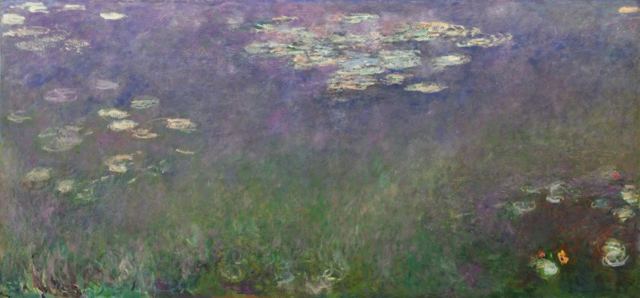
France, late 19th century-early 20th century · c. 1915–26
Water Lilies (Agapanthus)
Claude Monet
#281F16#604F40#7E6F63#4D3829#362F27#AEA6A0Estimated from six colour groups in the museum image, including visible paper or borders. Reproduction and lighting affect the result; these are image-area proportions, not pigment measurements.
Gift of the Hanna Fund · The Cleveland Museum of Art
Image licence: CC0 · Museum record & image source ↗
Although Veronese is best known for his large-scale, pageant-like presentations, here the artist has taken the narrative of the Annunciation (the announcement of the angel Gabriel to the Virgin Mary that she would conceive and bear a son) and compressed the figures close to one another, creating a startling intimacy. According to a tradition established by the medieval writer Saint Bernard, Mary has been reading from the Old Testament prophecy of Isaiah (7:14), "A young woman is with child and she will bear a son."
Collection text · The Cleveland Museum of Art · CC0The sketch sheet tests multiple possibilities with pen and wash; the portrait directs oil colour toward an individual presence; The Annunciation expands into a staged sacred encounter. Compare the abbreviated line of a study with coloured fabric and architectural depth in oils. These are differences of function as much as changes across years.
Artist-wide context; individual works may differ.
Pen-and-wash studies test arrangements before colour and larger painted settings develop them.
Architectural framing, staged gestures and elaborate drapery give narratives a ceremonial rhythm.
Rich fabrics and contrasting light organise oil paintings; monochrome studies isolate structural choices.
Start with what you can see: shapes, surface, colour and scale. How might the listed materials affect the way this object was made and experienced?
Looking prompt · an invitation to observe, not a historical interpretation.