 ↗
France, late 19th century-early 20th century · c. 1915–26
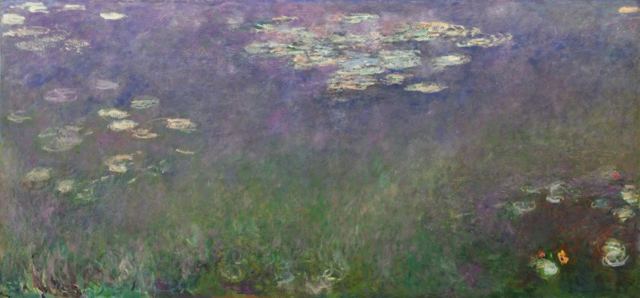
Water Lilies (Agapanthus)
Claude Monet
#818472#5E6D56#909281#434C44#72735C#A3A18EEstimated from six colour groups in the museum image, including visible paper or borders. Reproduction and lighting affect the result; these are image-area proportions, not pigment measurements.
Bequest of Leonard C. Hanna Jr. · The Cleveland Museum of Art
Image licence: CC0 · Museum record & image source ↗
This oil sketch is one of many preparatory studies Seurat made for his monumental painting Bathers at Asnières (1883-84), depicting men leisurely bathing in the Seine near an industrial suburb of Paris. Seurat borrowed the brilliant colors of Impressionism to suggest outdoor light, but added structure by emphasizing basic geometric shapes and firm outlines. As a leader of the movement to reform Impressionism, his style became known as Neo-Impressionism.
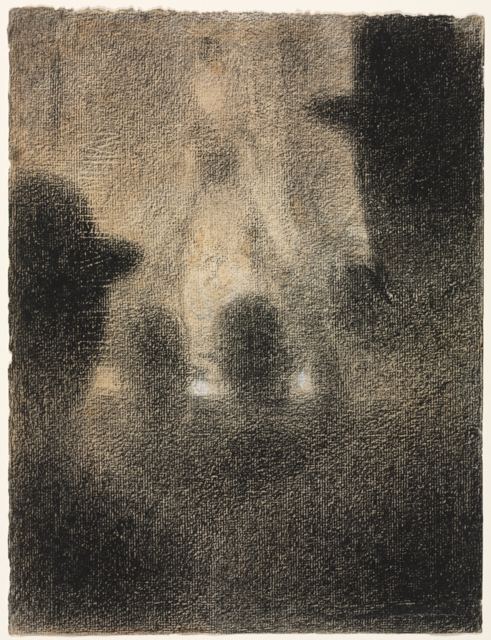
Collection text · The Cleveland Museum of Art · CC0The small oil study for Bathers tests masses and placement; the café-concert drawing creates luminous atmosphere with dark Conté and white chalk; The Circus develops colour contrasts and directional rhythms on a large canvas. Monochrome and divided colour were complementary investigations, not simple before-and-after stages.
Artist-wide context; individual works may differ.
Oil studies, Conté drawing and large canvases form complementary investigations.
Carefully prepared arrangements combine stable figures with directional lines and controlled intervals.
Divided colour explores luminosity; monochrome drawings create glow through dense darks and reserved light.
Start with what you can see: shapes, surface, colour and scale. How might the listed materials affect the way this object was made and experienced?
Looking prompt · an invitation to observe, not a historical interpretation.