 ↗
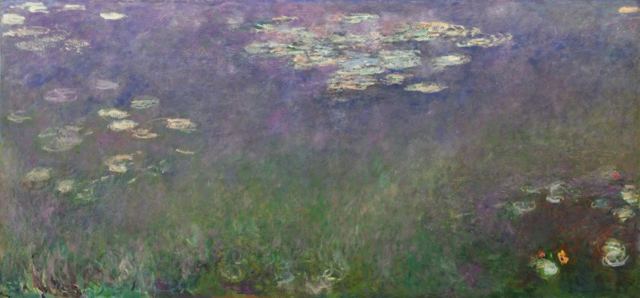
France, late 19th century-early 20th century · c. 1915–26
Water Lilies (Agapanthus)
Claude Monet
#392A21#6B432F#B6A8A2#CABFB9#82766B#A9826AEstimated from six colour groups in the museum image, including visible paper or borders. Reproduction and lighting affect the result; these are image-area proportions, not pigment measurements.
Small, vivid details detected in the image. These areas are already included in the dominant groups above; their percentages are not added to the total.
#B04D47≈ 0.29%Leonard C. Hanna Jr. Fund · The Cleveland Museum of Art
Image licence: CC0 · Museum record & image source ↗
Diana, the Roman goddess of the hunt, wears a crescent on her forehead, also identifying her as the moon goddess. Diana lived apart from men, accompanied by a group of nymphs; she often represented unattainable beauty or chastity. With a nymph at left fending off a lustful satyr, Rubens refers to a struggle between vice and virtue, combining a sensual display of female bodies with a moral undertone. To bring the viewer more fully into the narrative, Rubens pulls the full-bodied figures to the front of the picture plane, and Diana steps forward, activating the space between viewer and subject. The nymph at the right has the features of Isabella Brant, the artist’s wife, and can be compared with Rubens’s portrait of her, also in the museum's collection.
Collection text · The Cleveland Museum of Art · CC0Compare the painted hunting scene, the multi-figure drawing and the late Bear Hunt study. Different supports and degrees of finish test movement before or alongside larger projects. Follow diagonals, body turns and the use of light or colour to connect figures; a rapid study can be an intentional tool rather than an incomplete final picture.
Artist-wide context; individual works may differ.
Drawings and painted studies support larger works often realised with a substantial workshop.
Turning bodies, diagonals and interlocking gestures generate continuous compositional movement.
Warm flesh, fabric and light accents connect figures; rapid studies leave decisions deliberately visible.
Start with what you can see: shapes, surface, colour and scale. How might the listed materials affect the way this object was made and experienced?
Looking prompt · an invitation to observe, not a historical interpretation.