 ↗
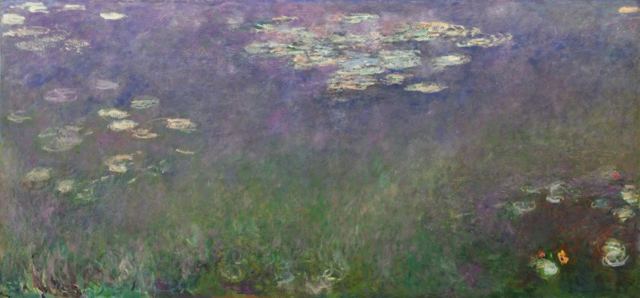
France, late 19th century-early 20th century · c. 1915–26
Water Lilies (Agapanthus)
Claude Monet
#B09675#D1B697#7F6A54#BEA583#C9AD8D#E0CEBBEstimated from six colour groups in the museum image, including visible paper or borders. Reproduction and lighting affect the result; these are image-area proportions, not pigment measurements.
Mr. and Mrs. Charles G. Prasse Collection · The Cleveland Museum of Art
Image licence: CC0 · Museum record & image source ↗
Although Mondrian is best known for his De Stijl paintings and as a founder of modern, abstract art, he began as a landscape and figurative artist. Between 1897 and 1907, he executed about fifty landscapes each year, comprising nearly half of his entire oeuvre. In 1905, a large exhibition of Vincent van Gogh’s work was held at the Stedelijk Museum in Amsterdam. The spindly, bare trees, low horizon, and the lone peasant in Landscape at Loosduinen reveal the influence of the Dutch master upon Mondrian. The drawing’s degree of finish suggests that it was either done on commission or intended for exhibition and sale.
Collection text · The Cleveland Museum of Art · CC0The 1905 and 1907 landscapes retain trees and fields, while the 1927 composition abandons descriptive scenery. Oil remains the medium, so the decisive changes concern representation, edge and colour relationships. Ask which earlier arrangements of verticals, horizontals and intervals continue to matter after recognisable objects disappear.
Artist-wide context; individual works may differ.
Oil painting remains a constant while representation changes from landscape to abstraction.
Verticals, horizontals and carefully adjusted intervals replace descriptive trees and fields.
Primary colour areas and neutral spaces create dynamic balance rather than imitate natural light.
Start with what you can see: shapes, surface, colour and scale. How might the listed materials affect the way this object was made and experienced?
Looking prompt · an invitation to observe, not a historical interpretation.