 ↗
France, late 19th century-early 20th century · c. 1915–26
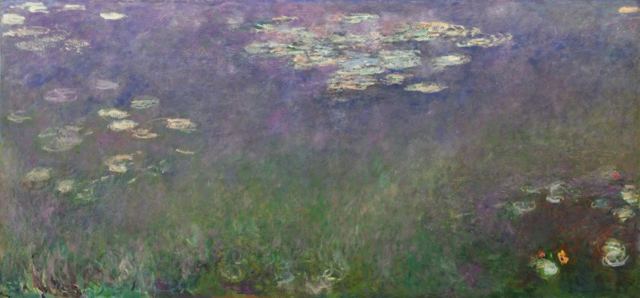
Water Lilies (Agapanthus)
Claude Monet
#1A1A18#2B1E18#3C291B#242720#8F8878#4D4C40Estimated from six colour groups in the museum image, including visible paper or borders. Reproduction and lighting affect the result; these are image-area proportions, not pigment measurements.
Mr. and Mrs. William H. Marlatt Fund · The Cleveland Museum of Art
Image licence: CC0 · Museum record & image source ↗
This keenly perceptive portrait of Susanna Anderson Rose (1795–1870) was painted when the sitter was 67 years old. The fine network of lines on her face are meticulously observed as are her silver gray curls and pale blue eyes. Frederick Sandys’s ability to render detail is evident in the subject’s bonnet, elaborately trimmed with lace and azure ribbon, and the texture of her brown fur cloak.
Collection text · The Cleveland Museum of Art · CC0The 1862 portrait describes an older sitter; Medea turns the figure toward myth and material richness; the 1871 chalk drawing uses black, brown and red to build another kind of presence. Compare skin, hair and accessories across oil and dry drawing materials. A narrow date span supports focused comparison, not a complete biography in pictures.
Artist-wide context; individual works may differ.
Oil and coloured chalk create different degrees of polish and dry texture.
Precise hair, facial lines and accessories give individual heads psychological intensity.
Restricted black, brown and red drawing colours can model presence as deliberately as richer painted surfaces.
Start with what you can see: shapes, surface, colour and scale. How might the listed materials affect the way this object was made and experienced?
Looking prompt · an invitation to observe, not a historical interpretation.