 ↗
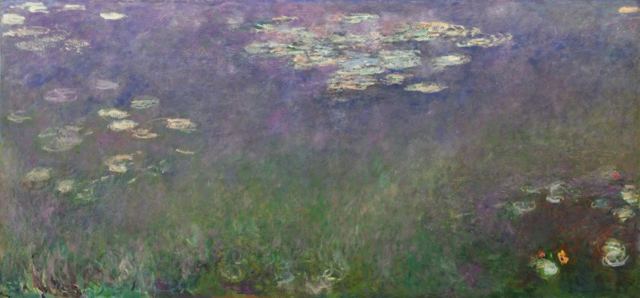
France, late 19th century-early 20th century · c. 1915–26
Water Lilies (Agapanthus)
Claude Monet
#1D1A18#33231F#342B25#45362E#492B26#715E51Estimated from six colour groups in the museum image, including visible paper or borders. Reproduction and lighting affect the result; these are image-area proportions, not pigment measurements.
Mr. and Mrs. William H. Marlatt Fund · The Cleveland Museum of Art
Image licence: CC0 · Museum record & image source ↗
William Holman Hunt painted this portrait of Mary Walker Waugh (1805–1886)—his mother-in-law—during a time of personal tragedy. Waugh’s daughter Fanny Waugh Hunt (1832–1866), the wife of the artist, had recently died following childbirth. References to loss of life infiltrate the composition: the sitter wears black mourning attire, and behind her is a screen decorated with red poppies, a traditional symbol of unconsciousness and lifelessness because of its pharmaceutical use as a source for opiates. In Victorian society, the red poppy also signified consolation.
Collection text · The Cleveland Museum of Art · CC0The 1851 graphite study prepares a painted narrative; the 1868 portrait gives oil colour a role in remembrance and character; the 1879 etching translates feeling into line. Compare the intended use of each work before judging its finish. Precise detail can serve symbolism, observation or personal memory rather than one fixed purpose.
Artist-wide context; individual works may differ.
Graphite studies, oil painting and etching separate planning, finished colour and printed line.
Close observation and sharply articulated details support narrative and symbolic meaning.
Defined colour and light make objects legible; detailed finish can carry moral or commemorative purpose.
Start with what you can see: shapes, surface, colour and scale. How might the listed materials affect the way this object was made and experienced?
Looking prompt · an invitation to observe, not a historical interpretation.