 ↗
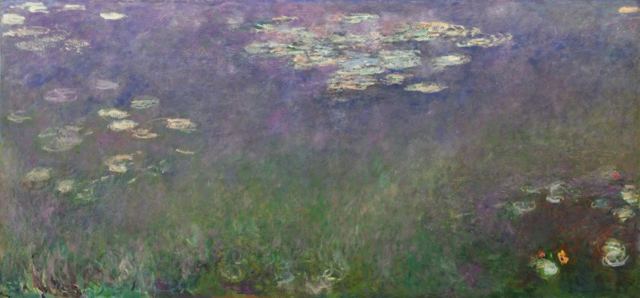
France, late 19th century-early 20th century · c. 1915–26
Water Lilies (Agapanthus)
Claude Monet
#E8E1D5#EAE4D8#ECE6DA#E3DCD0#ECE5D9#EFE9DCEstimated from six colour groups in the museum image, including visible paper or borders. Reproduction and lighting affect the result; these are image-area proportions, not pigment measurements.
John L. Severance Fund · The Cleveland Museum of Art
Image licence: CC0 · Museum record & image source ↗
Hereford Cathedral is a representative work in our Joseph Mallord William Turner guide. The catalogue records graphite. Museum attribution. The linked artist guide places it alongside other works from the artist’s career.
Original educational overview · based on the linked museum recordCompare the early cathedral study, the 1814 print and the 1845 Lucerne watercolour. Architectural detail, reproductive line and atmospheric wash involve different surfaces and working processes. Do not read the print’s monochrome as a loss of interest in colour: translation into a printed medium serves a different purpose from a coloured original.
Artist-wide context; individual works may differ.
Graphite, printmaking and watercolour each test a different relation between detail and atmosphere.
Defined topography can loosen into washes, scraped highlights and suggestions of form.
Late watercolours use luminous light-dark and warm-cool relationships without abandoning specific places.
Start with what you can see: shapes, surface, colour and scale. How might the listed materials affect the way this object was made and experienced?
Looking prompt · an invitation to observe, not a historical interpretation.