 ↗
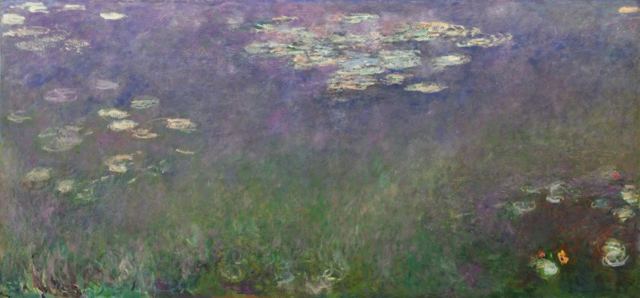
France, late 19th century-early 20th century · c. 1915–26
Water Lilies (Agapanthus)
Claude Monet
#978A77#9A8E7B#9C907E#9E9280#9B8F7D#72685AEstimated from six colour groups in the museum image, including visible paper or borders. Reproduction and lighting affect the result; these are image-area proportions, not pigment measurements.
Gift of Mr. and Mrs. Charles Hickox · The Cleveland Museum of Art
Image licence: CC0 · Museum record & image source ↗
Mother and Child (recto) is a representative work in our Paul Gauguin guide. The catalogue records black chalk. Museum attribution. The linked artist guide places it alongside other works from the artist’s career.
Original educational overview · based on the linked museum recordThe early chalk study relies on tonal drawing; the 1891 head and 1902 painting use different kinds of presence and narrative. Compare flat areas, outlines and the relationship between figures and setting. Colour can carry a symbolic mood without providing reliable evidence of the sitter’s inner life or an authentic, timeless culture.
Artist-wide context; individual works may differ.
Drawing, painting and printmaking offer parallel routes; material changes do not form a simple ladder.
Emphatic outlines and simplified planes reduce conventional modelling and strengthen symbolic arrangement.
Non-naturalistic colour creates mood; the palette must be read within the work’s colonial and imaginative context.
Start with what you can see: shapes, surface, colour and scale. How might the listed materials affect the way this object was made and experienced?
Looking prompt · an invitation to observe, not a historical interpretation.