 ↗
France, late 19th century-early 20th century · c. 1915–26
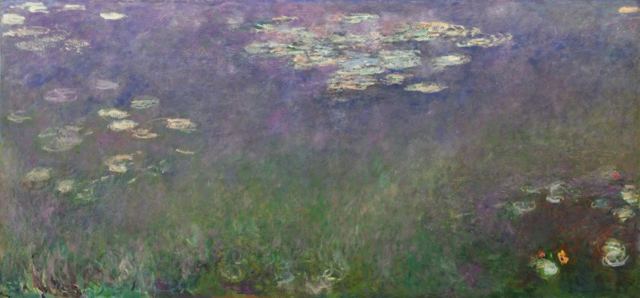
Water Lilies (Agapanthus)
Claude Monet
#C7AC8A#C0A684#CAB08D#C3A986#AC9374#E4D1B7Estimated from six colour groups in the museum image, including visible paper or borders. Reproduction and lighting affect the result; these are image-area proportions, not pigment measurements.
Bequest of Muriel Butkin · The Cleveland Museum of Art
Image licence: CC0 · Museum record & image source ↗
This sheet of head studies unites three fundamental characteristics of Degas's art: consummate draftsmanship, captured movement and expression, and an almost obsessive attention to the attitudes of the female figure. Drawn in 1856 during his first trip to Italy, the sheet represents the model in successive positions and expressions of suffering. The name inscribed at the upper right-Rita Cacciala-must be that of the model. Writing models' names and addresses on figure studies was a common practice among artists, providing them with a handy reference of models they might want to contact for future use.
Collection text · The Cleveland Museum of Art · CC0Compare the controlled graphite head studies of 1856, the mid-career oil portrait of two men examining a painting, and the oil-painted dancers of the 1890s. Graphite and oil make different kinds of edges; the two paintings also differ in support and handling. Cropping and repeated bodies can make carefully arranged compositions feel like momentary glimpses.
Artist-wide context; individual works may differ.
Graphite and oil support sustained drawing and carefully constructed painted surfaces.
Cropping, off-centre figures and repeated poses organise movement rather than record a neutral snapshot.
Colour and tone separate bodies from surroundings; surface handling varies by project and support.
Start with what you can see: shapes, surface, colour and scale. How might the listed materials affect the way this object was made and experienced?
Looking prompt · an invitation to observe, not a historical interpretation.