 ↗
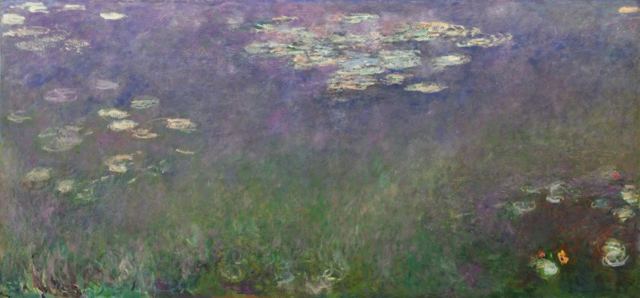
France, late 19th century-early 20th century · c. 1915–26
Water Lilies (Agapanthus)
Claude Monet
Purchase from the John L. Severance Fund, the Dudley P. Allen Fund, by exchange, and the Sundry Art - Miscellaneous Fund · The Cleveland Museum of Art
Image licence: CC0 · Museum record & image source ↗
With its central cartouche, heavy molding, and fluted sides, the design of this box attests to Juste-Aurèle Meissonnier’s interest in architecture. The box is further distinguished by a strong sense of movement, achieved through its dynamic contour, extraordinary level of detail, and the dramatic contrast between gold and lapis lazuli.Such small boxes, known as snuffboxes, were used to hold scented powdered tobacco that was inhaled through the nostrils. Made of precious materials and highly ornamented, they conveyed the owner’s wealth, fashion awareness, sophistication, and social standing. These personal, collectible items were often presented as luxurious gifts. This box was made for the dowager Queen of Spain, Maria Anna of Neuburg, whose coat of arms – along with that of her late husband, Charles II – features on the cover.
Collection text · The Cleveland Museum of Art · CC0The 1728–29 gold box compresses ornament into a handheld object; the 1735–38 tureen expands movement across a table; the candlestick turns an upright support into a spiralling form. Compare reflective gold, silver and gilt metal rather than searching for a painter’s palette. Function, viewing angle and maker collaboration shape style.
Artist-wide context; individual works may differ.
Precious metal designs rely on specialist fabrication, chasing and finishing.
Asymmetrical spirals and organic ornament reshape practical objects into moving silhouettes.
Gold, silver and gilt surfaces create colour through material and reflection rather than pictorial pigment.
Start with what you can see: shapes, surface, colour and scale. How might the listed materials affect the way this object was made and experienced?
Looking prompt · an invitation to observe, not a historical interpretation.