 ↗
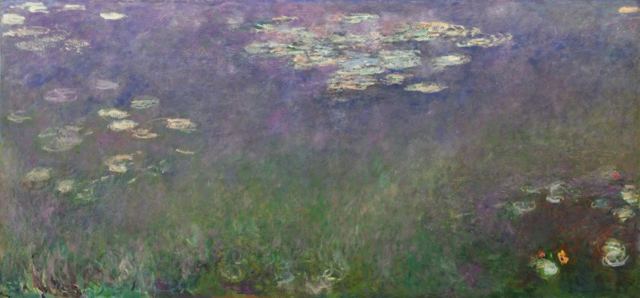
France, late 19th century-early 20th century · c. 1915–26
Water Lilies (Agapanthus)
Claude Monet
#BAC1BD#69584D#877C6C#A08974#B0ACA2#C9CDC7Estimated from six colour groups in the museum image, including visible paper or borders. Reproduction and lighting affect the result; these are image-area proportions, not pigment measurements.
Nancy F. and Joseph P. Keithley Collection Gift · The Cleveland Museum of Art
Image licence: CC0 · Museum record & image source ↗
This impressive view of a bustling fish market belongs to a series of paintings that Pissarro made during the summer of 1902 depicting the harbor at Dieppe. Borrowing from the Impressionist method of portraying a modern city from a high vantage point, he enlivened the scene with rich, vibrant colors applied with energetic, broken brushstrokes. Ever concerned with the fleeting effects of atmosphere, Pissarro painted the interpenetration of industrial steam with the clouds in the brilliant, sunlit sky.
Collection text · The Cleveland Museum of Art · CC0Follow the 1866 landscape, the 1872 lock, the 1879 woodland edge and the 1902 market. Compare the balance between architecture, foliage and human activity, then the changing density of marks. These selected works do not cover every colour experiment, so they should not be used to claim a continuous, one-direction shift in technique.
Artist-wide context; individual works may differ.
Painted landscapes and printed urban scenes preserve an interest in everyday environments.
Small repeated marks organise foliage, architecture and human activity without erasing their differences.
Tonal and colour relations bind land and sky; his divided-colour experiments were one phase, not a permanent rule.
Start with what you can see: shapes, surface, colour and scale. How might the listed materials affect the way this object was made and experienced?
Looking prompt · an invitation to observe, not a historical interpretation.