 ↗
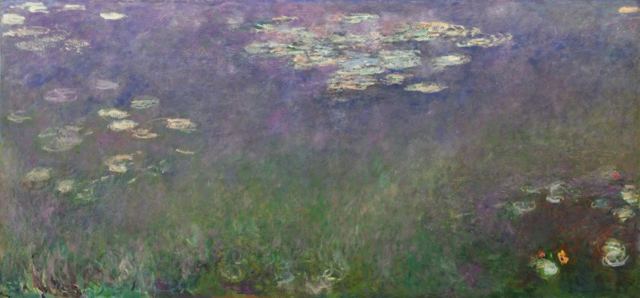
France, late 19th century-early 20th century · c. 1915–26
Water Lilies (Agapanthus)
Claude Monet
Image not displayed
Read the artwork notes and catalogue information.Musée d’Orsay · Catalogue source ↗ · Image policy ↗
Seurat’s final major canvas places circus performance within his study of colour and rhythm. It offers a late comparison with his quieter figure studies: the subject changes, while the relationship between individual marks and the overall image remains central.
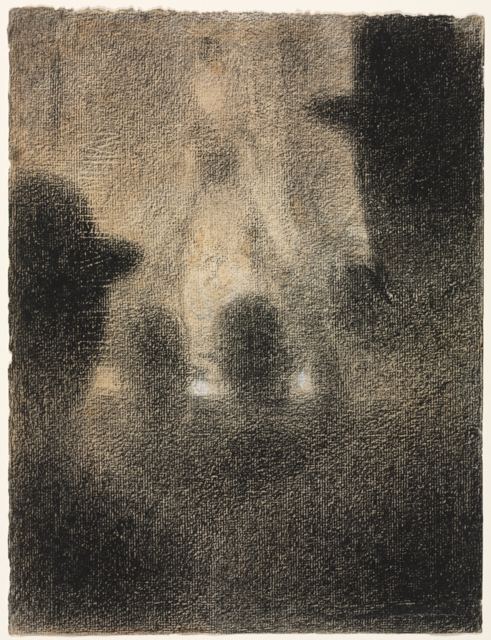
Original educational overview · based on the linked museum recordThe small oil study for Bathers tests masses and placement; the café-concert drawing creates luminous atmosphere with dark Conté and white chalk; The Circus develops colour contrasts and directional rhythms on a large canvas. Monochrome and divided colour were complementary investigations, not simple before-and-after stages.
Artist-wide context; individual works may differ.
Oil studies, Conté drawing and large canvases form complementary investigations.
Carefully prepared arrangements combine stable figures with directional lines and controlled intervals.
Divided colour explores luminosity; monochrome drawings create glow through dense darks and reserved light.
Start with what you can see: shapes, surface, colour and scale. How might the listed materials affect the way this object was made and experienced?
Looking prompt · an invitation to observe, not a historical interpretation.