 ↗
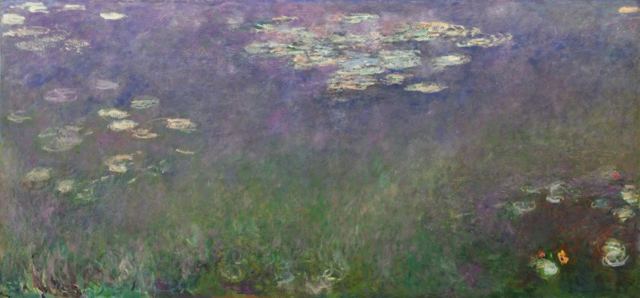
France, late 19th century-early 20th century · c. 1915–26
Water Lilies (Agapanthus)
Claude Monet
Image not displayed
Read the artwork notes and catalogue information.Uffizi Galleries · Catalogue source ↗ · Image policy ↗
A religious scene also becomes a record of Florentine patronage: the Uffizi identifies Medici portraits and the patron Gaspare del Lama among its figures. The wood support and tempera grassa distinguish it materially from Botticelli’s later canvas of Venus.
Original educational overview · based on the linked museum recordThe 1470–75 Adoration places contemporary identities inside a sacred narrative; The Birth of Venus gives line and idealised bodies a mythological role; the later tondo returns to intimate devotion. Compare wood and canvas supports, tempera-based surfaces and the organisation of contour. Subject matter alone does not prove a sudden personal conversion.
Artist-wide context; individual works may differ.
Tempera-based painting works across wood and canvas, producing different surface and scale relationships.
Flowing contours and carefully patterned bodies often take precedence over heavy volumetric modelling.
Colour supports clear silhouettes and rhythmic arrangement; sacred and mythological subjects do not require separate palettes.
Start with what you can see: shapes, surface, colour and scale. How might the listed materials affect the way this object was made and experienced?
Looking prompt · an invitation to observe, not a historical interpretation.