 ↗
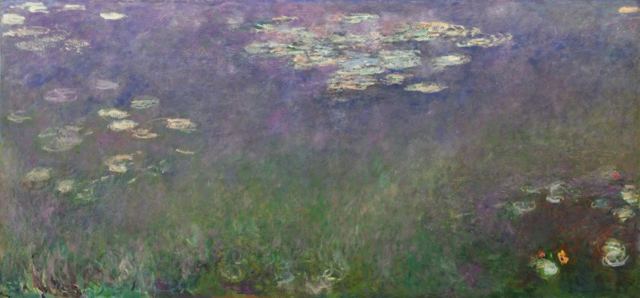
France, late 19th century-early 20th century · c. 1915–26
Water Lilies (Agapanthus)
Claude Monet
Image not displayed
Read the artwork notes and catalogue information.The Metropolitan Museum of Art · Catalogue source ↗ · Image policy ↗
This object is associated with a design by Thomas Hope. Distinguishing the designer from the craftspeople is essential: carved wood and gilded metal combine to create an elaborate lighting object, rather than a painting or a single-material sculpture.
Original educational overview · based on the linked museum recordThe chandelier, settee and chair cluster around the early 1800s and the publication period, so they are not three successive life stages. Compare gilded surfaces, antique motifs and the balance of structure and ornament across functions. The settee’s reproduction upholstery is not evidence of its original fabric colour.
Artist-wide context; individual works may differ.
Furniture and lighting designs were realised by specialist makers in wood, gilding and metal.
Antique-derived motifs and clear structural symmetry connect objects with a designed interior.
Gilded surfaces create reflected brightness; replacement upholstery cannot establish the original textile palette.
Start with what you can see: shapes, surface, colour and scale. How might the listed materials affect the way this object was made and experienced?
Looking prompt · an invitation to observe, not a historical interpretation.