 ↗
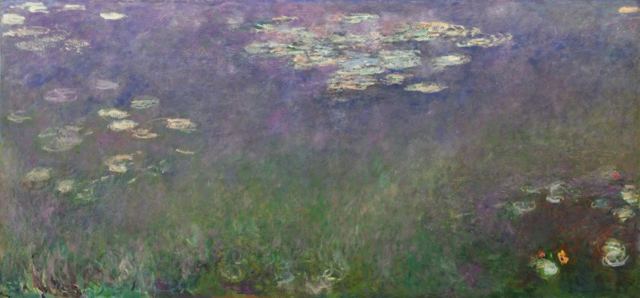
France, late 19th century-early 20th century · c. 1915–26
Water Lilies (Agapanthus)
Claude Monet
Image not displayed
Read the artwork notes and catalogue information.Birmingham Museums; Nevada Museum of Art exhibition checklist · Catalogue source ↗ · Image policy ↗
Sandys’s Medea combines oil paint with gold leaf on a composite wood support. These are materially different layers: painted modelling and a metallic surface produce effects that a single flat colour description cannot fully explain.
Original educational overview · based on the linked museum recordThe 1862 portrait describes an older sitter; Medea turns the figure toward myth and material richness; the 1871 chalk drawing uses black, brown and red to build another kind of presence. Compare skin, hair and accessories across oil and dry drawing materials. A narrow date span supports focused comparison, not a complete biography in pictures.
Artist-wide context; individual works may differ.
Oil and coloured chalk create different degrees of polish and dry texture.
Precise hair, facial lines and accessories give individual heads psychological intensity.
Restricted black, brown and red drawing colours can model presence as deliberately as richer painted surfaces.
Start with what you can see: shapes, surface, colour and scale. How might the listed materials affect the way this object was made and experienced?
Looking prompt · an invitation to observe, not a historical interpretation.