 ↗
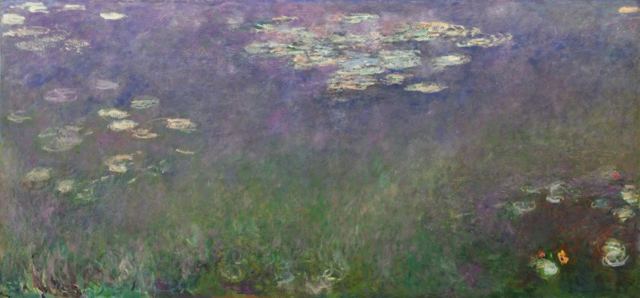
France, late 19th century-early 20th century · c. 1915–26
Water Lilies (Agapanthus)
Claude Monet
Image not displayed
Read the artwork notes and catalogue information.The Museum of Modern Art · Catalogue source ↗ · Image policy ↗
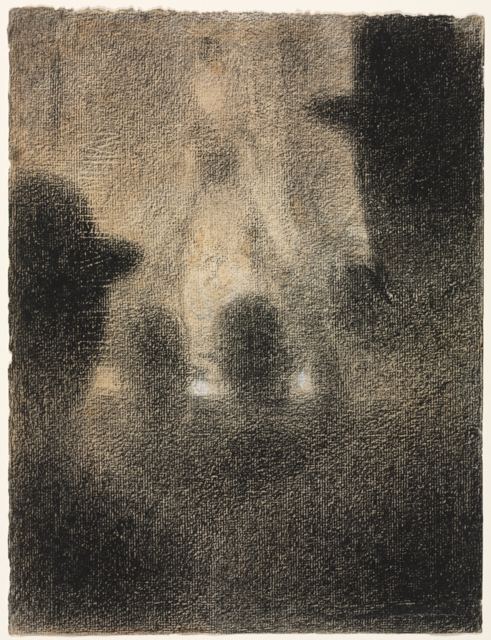
This paper drawing records crayon and pencil as its materials. Its comparison with Marcoussis’s prints is useful because a drawn line and a printed line are produced differently, even when both organise an image through edges and planes.
Original educational overview · based on the linked museum recordThe 1920 Bar combines several intaglio methods; the oil Night Café develops related spatial problems through colour; the 1930 Stairway uses crayon and pencil on paper. Compare printed tonal grain, painted planes and directly drawn lines. A later monochrome drawing does not mean the artist had rejected colour; it reflects a different material and project.
Artist-wide context; individual works may differ.
Aquatint, etching, oil and direct crayon drawing offer distinct routes through compressed space.
Intersecting planes and overlapping signs maintain Cubist relations between objects and setting.
Printed grain, drawn tone and painted colour articulate similar spatial problems with different means.
Start with what you can see: shapes, surface, colour and scale. How might the listed materials affect the way this object was made and experienced?
Looking prompt · an invitation to observe, not a historical interpretation.