 ↗
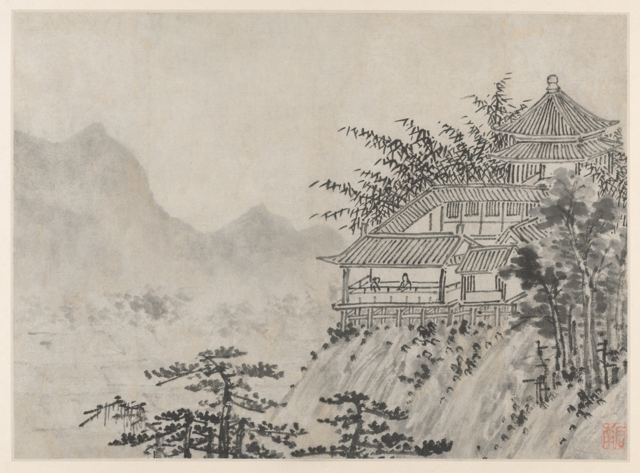
China, Ming dynasty (1368–1644) · after 1490
The Thousand Acres of Clouds, from Twelve Views of Tiger Hill, Suzhou
Shen Zhou
Image not displayed
Read the artwork notes and catalogue information.Kyoto National Museum, AK235 · Catalogue source ↗ · Image policy ↗
An orchid-and-rock composition is included as a reference comparison in our Puming guide. The Kyoto source link leads to a catalogue search rather than a verified object page; the precise identification and date remain under review.
Original educational overview · based on the linked museum recordCompare the wind-bent bamboo with the Kyoto orchids and rock and the dated 1343 orchids-and-bamboo entry. The brush can suggest leaves, resilience and movement without a broad palette. Only one example supplies a precise year; the museum and exhibition records do not justify assigning the others to invented early or late phases.
Artist-wide context; individual works may differ.
Ink painting makes brush loading and the support central to leaf and stem effects.
Flexible leaf strokes and firm stems connect botanical observation with calligraphic movement.
A narrow ink palette creates variety through dilution, density and open space, not bright pigment.
Start with what you can see: shapes, surface, colour and scale. How might the listed materials affect the way this object was made and experienced?
Looking prompt · an invitation to observe, not a historical interpretation.↗Shen Zhou
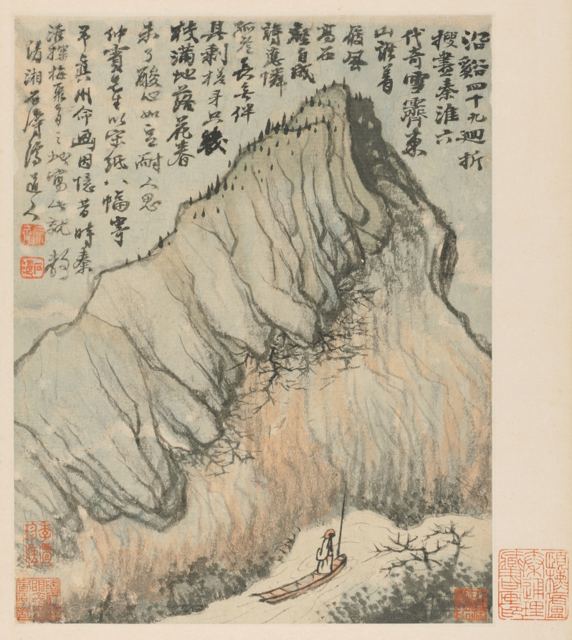 ↗
Shitao
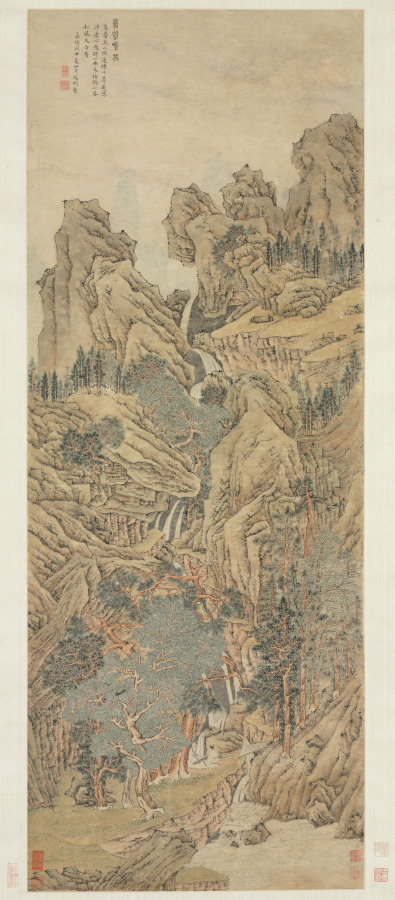 ↗
Wen Zhengming
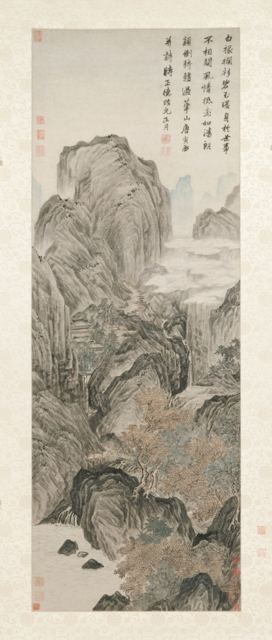 ↗
Tang Yin