 ↗
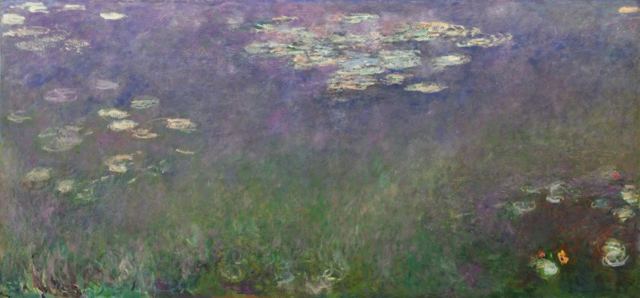
France, late 19th century-early 20th century · c. 1915–26
Water Lilies (Agapanthus)
Claude Monet
#1D1107#391E0F#433826#5F442C#998870#756450Estimated from six colour groups in the museum image, including visible paper or borders. Reproduction and lighting affect the result; these are image-area proportions, not pigment measurements.
Rogers Fund, 1952 · The Metropolitan Museum of Art
Image licence: CC0 · Museum record & image source ↗
This early Caravaggio painting makes music a setting for closely grouped figures. Read it alongside the later religious scenes in the artist guide to follow how bodies, gestures and directed light carry a narrative.
Original educational overview · based on the linked museum recordCompare the youthful gathering in The Musicians, the outward gestures and table space in the 1601 Supper, and the darker martyrdom of 1606–7. Related canvas-painting methods serve very different encounters. Trace where light isolates flesh, fabric and expressions, and how surrounding darkness changes the emotional pace.
Artist-wide context; individual works may differ.
Canvas painting gives bodily figures a physically immediate scale and surface.
Strong gestures and selective contours bring narrative action close to the viewer.
Concentrated illumination isolates flesh and cloth against darkness; the balance changes across commissions.
Start with what you can see: shapes, surface, colour and scale. How might the listed materials affect the way this object was made and experienced?
Looking prompt · an invitation to observe, not a historical interpretation.