Life and career
Origins and training
Canova was born into a stoneworking family in Possagno. His grandfather helped arrange his early training; Venice then offered workshops, patrons and opportunities to study the figure.
Places, turning points and artistic change
Rome and the study of antiquity redirected his sculpture towards idealised bodies and carefully balanced poses. Clay and plaster models helped organise projects later realised in marble with workshop assistance.
Beyond the studio
He helped recover Italian artworks taken to France under Napoleon and supported building and education in his hometown. Diplomacy and cultural preservation were substantial parts of his public role.
Works across a career
Selected examples, not a complete catalogue. Read date ranges and attributions before inferring a career sequence.
Reading the selected works together
The embrace, grouped bodies and single muse show how pose changes with the number and relationship of figures.
- 01
1787–93
1787–93
Cupid and Psyche
- Material / technique
- Sculpture
- Attribution / role
- See the museum attribution
- Collection / source
- Museo Canova — Biography
Interlocking bodies make an embrace legible from several viewpoints.
- 02
1812–17
1812–17
The Three Graces
- Material / technique
- Sculpture
- Attribution / role
- See the museum attribution
- Collection / source
- Museo Canova — Biography
The three bodies form a connected group rather than three separate portraits.
- 03
1816
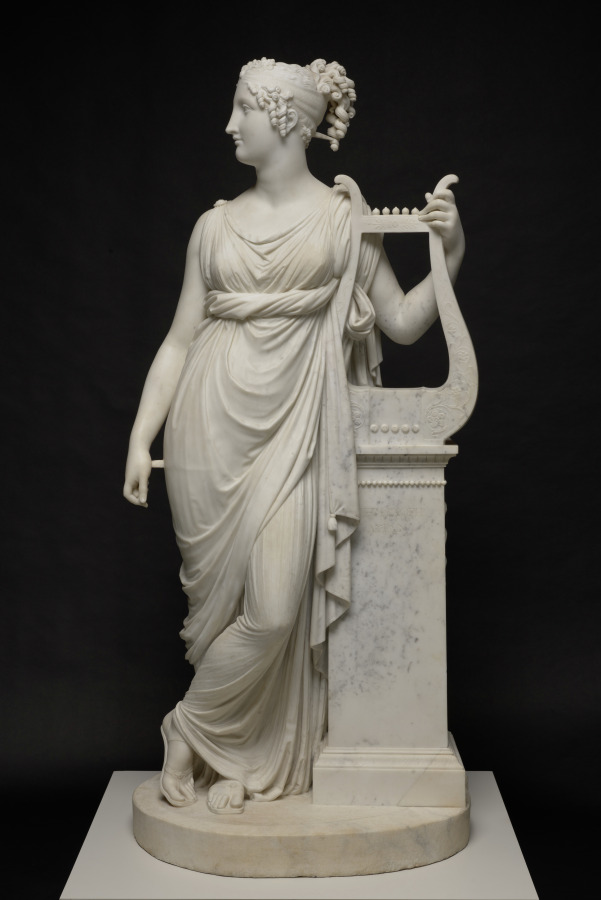 Explore artwork ↗
1816
Terpsichore Lyran (Muse of Lyric Poetry)
- Material / technique
- marble
- Attribution / role
- Collection / source
- The Cleveland Museum of Art
Artist-wide context
Carefully polished marble and balanced poses make his figures seem calm, light and close to living flesh.
· CC0
Materials, marks and colour
Media and surface
Clay and plaster models precede the demanding carving and finishing of marble.
Marks and structure
Balanced poses can be calm without being completely still.
Palette and light
Polish and subtle surface changes make pale stone catch light like soft skin.