 ↗
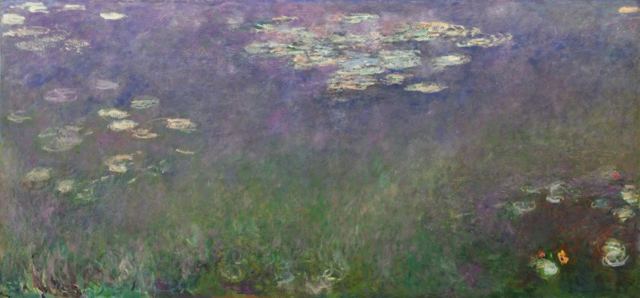
France, late 19th century-early 20th century · c. 1915–26
Water Lilies (Agapanthus)
Claude Monet
#EDDDC3#E2D3B9#EBDBC1#F1E0C6#CBBEA7#E7D6BDEstimated from six colour groups in the museum image, including visible paper or borders. Reproduction and lighting affect the result; these are image-area proportions, not pigment measurements.
Gift of The Print Club of Cleveland · The Cleveland Museum of Art
Image licence: CC0 · Museum record & image source ↗
Odilon Redon grew up near the massive Pyrénées mountains in southern France and their image recurred throughout his work. In a series of drawings made during the 1870s, Redon used the craggy surface and infinite reach of his native landscape to evoke a sense of solitude and isolation. The woman seen here, for example, leans forward and casts her eyes downward as if in resignation.
Collection text · The Cleveland Museum of Art · CC0Compare the 1868 graphite landscape, the 1893 lithograph and the 1916 floral pastel. Dark marks can create an imaginative space through tone alone; dry coloured pastel gives a different intensity and texture. Track how a recognisable motif becomes suggestive through cropping, scale and its surrounding atmosphere.
Artist-wide context; individual works may differ.
Graphite and lithographic darks coexist with later dry, luminous pastel colour.
Isolated forms, unusual scale and suggestive outlines move familiar motifs toward imagined worlds.
Dark tonal visions and saturated floral passages are complementary strands rather than a simple emotional reversal.
Start with what you can see: shapes, surface, colour and scale. How might the listed materials affect the way this object was made and experienced?
Looking prompt · an invitation to observe, not a historical interpretation.