 ↗
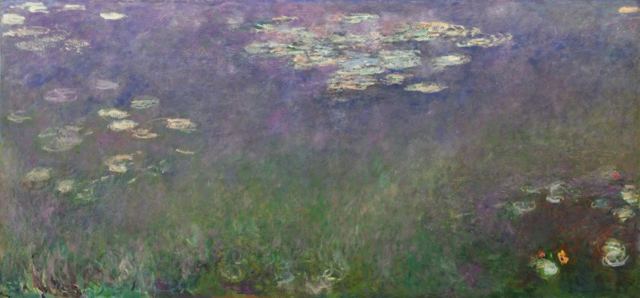
France, late 19th century-early 20th century · c. 1915–26
Water Lilies (Agapanthus)
Claude Monet
Bequest of Charles T. Brooks · The Cleveland Museum of Art
Image licence: CC0 · Museum record & image source ↗
This print belongs to a series of color etchings created by Mary Cassatt between 1890 and 1891. Each was influenced by the artist's study of Japanese woodblock prints, especially in their use of flat planes of color and domestic subject matter. In the scene depicted here, a middle-class woman accompanies her nursemaid and child on errands throughout Paris. The group rides in an omnibus, a form of public transportation where different genders and classes could intermingle. While the nanny's attention stays focused on her young charge, the female subject appears distracted, gazing toward the world beyond.
Collection text · The Cleveland Museum of Art · CC0The graphite study, colour print In the Omnibus and later pastel After the Bath show three ways to organise intimate encounters. Compare line against broad colour areas and the softer or more broken texture of pastel. The shift in medium changes surface and reproducibility, not simply the emotional seriousness of the subject.
Artist-wide context; individual works may differ.
Graphite, colour intaglio prints and pastel create sharply different textures and degrees of reproducibility.
Strong cropping and clear contours organise intimate relationships without elaborate narrative scenery.
Broad colour areas and patterned surfaces coexist with the softer, broken colour of pastel.
Start with what you can see: shapes, surface, colour and scale. How might the listed materials affect the way this object was made and experienced?
Looking prompt · an invitation to observe, not a historical interpretation.