 ↗
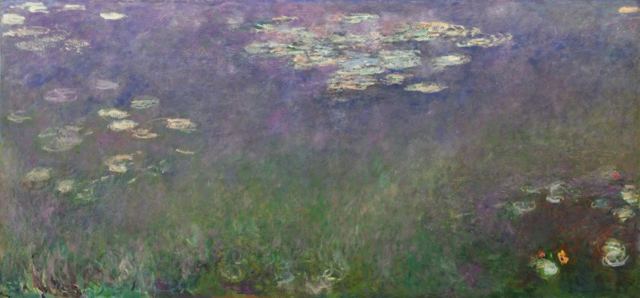
France, late 19th century-early 20th century · c. 1915–26
Water Lilies (Agapanthus)
Claude Monet
Gift of The Print Club of Cleveland in memory of William J. Eastman · The Cleveland Museum of Art
Image licence: CC0 · Museum record & image source ↗
In both his sculpture and prints, Barlach expressed the suffering and anguish of World War I (1914-18) and the difficult years that followed. The artist, whose work depicts ordinary workers, wrote: "Truly, not beauty and loveliness is our strength, our power, but rather the opposite, ugliness, daemonic passion and the grotesque genius of greatness..."
Collection text · The Cleveland Museum of Art · CC0Compare the 1906 terracotta beggar, the 1928 bronze singer and the 1931 lithograph. Clay, cast metal and printed marks carry weight differently. Colour is often secondary to mass, surface and gesture; ask how a compact body can appear inwardly active. A bronze’s model date and casting history should be read separately where the catalogue distinguishes them.
Artist-wide context; individual works may differ.
Modelled clay, cast bronze and lithography carry weight through distinct processes.
Compact bodies, enveloping clothing and concentrated gestures express inward activity.
Material tone, shadow and surface often matter more than a varied painted palette.
Start with what you can see: shapes, surface, colour and scale. How might the listed materials affect the way this object was made and experienced?
Looking prompt · an invitation to observe, not a historical interpretation.