 ↗
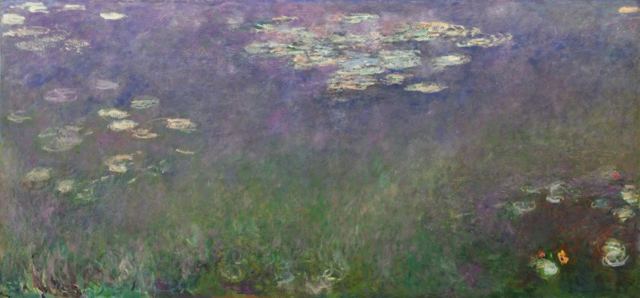
France, late 19th century-early 20th century · c. 1915–26
Water Lilies (Agapanthus)
Claude Monet
John L. Severance Fund · The Cleveland Museum of Art
Image licence: CC0 · Museum record & image source ↗
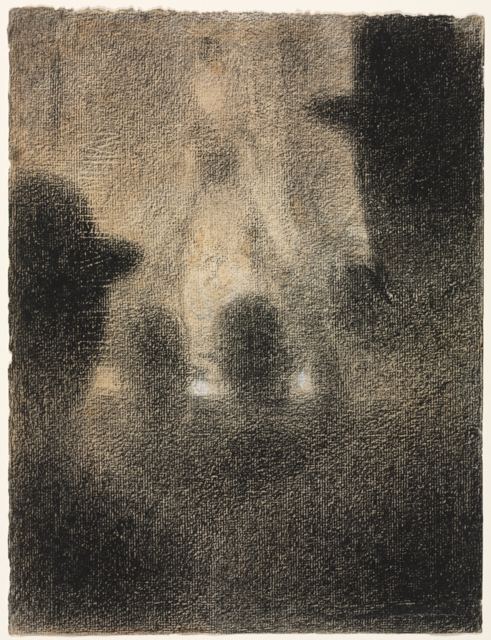
Goya left Spain in 1824 to escape the repressive rule of King Ferdinand VII and settled in Bordeaux, France, where he met Gaulon, an expert lithographer. Working with him, Goya executed Woman Reading to Two Children, where he drew densely with a crayon and then scratched out fine highlights on the woman's arm, skirt, mantilla, and around her head. An onlooker described Goya's methods, "Usually he covered the whole stone with a uniform gray tone and then removed with the scraper those parts which were to appear light. . . . Next the crayon was again employed to strengthen the shadows, the accents." Goya's portrayal of the children's rapt attention and the tranquil figure of the young woman suggests that this charming domestic scene was observed by the artist in his own home. Goya was joined in Bordeaux by his companion Leocadia Weiss and her two younger children, Guillermo and María del Rosario. Only seven impressions of this lithograph are known, all of which are now in museum collections.
Collection text · The Cleveland Museum of Art · CC0Compare the tonal satire of the 1799 print with the 1819 oil portrait and the 1824–25 lithograph of reading. Etching and aquatint, layered oil and drawing on a lithographic matrix produce different textures and audiences. Check both design and printing dates: an impression made after his death is not a new late-life invention.
Artist-wide context; individual works may differ.
Oil, etching, aquatint and late lithography give each project a different surface and audience.
Compressed gestures and selective detail can sharpen a portrait or a satirical scene.
Aquatint creates broad tonal fields; painted colour and lithographic darks serve different kinds of illumination.
Start with what you can see: shapes, surface, colour and scale. How might the listed materials affect the way this object was made and experienced?
Looking prompt · an invitation to observe, not a historical interpretation.