 ↗
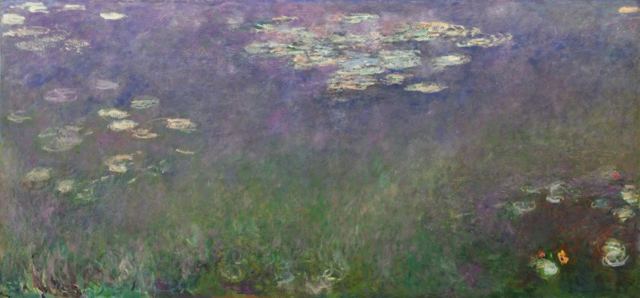
France, late 19th century-early 20th century · c. 1915–26
Water Lilies (Agapanthus)
Claude Monet
Carole W. and Charles B. Rosenblatt Endowment Fund · The Cleveland Museum of Art
Image licence: CC0 · Museum record & image source ↗
This print series features thirteen engravings depicting Christ and the Apostles (Christ’s primary disciples). In each scene, an apostle is shown in the foreground, with architecture and landscape behind him that indicate the locales in which he preached Christ’s message, from Rome to India. In the middle ground of each print, the apostle’s martyrdom is enacted with multiple figures, while the party responsible for his death—be it king, idol, or devil—looks on. Martyrdom was tied to sainthood in Roman Catholic theology, and martyrdoms appeared frequently in art made after 1563, when the Catholic Church declared that religious art should create empathetic, personal connections to the saints.
Collection text · The Cleveland Museum of Art · CC0Compare the early apostle series, the 1592 Hercules engraving and the landscape woodcut around 1600. Engraved swelling lines model bodies through controlled incisions; a relief woodcut establishes shapes through a different relation of cut and uncut areas. Monochrome can imply muscular volume or landscape depth without painted local colour.
Artist-wide context; individual works may differ.
Engraving incises lines into a plate; woodcut prints the parts left in relief.
Swelling and tapering lines model muscular bodies; relief cuts simplify landscape into graphic shapes.
Monochrome brightness comes from the spacing and density of printed marks, not painted highlights.
Start with what you can see: shapes, surface, colour and scale. How might the listed materials affect the way this object was made and experienced?
Looking prompt · an invitation to observe, not a historical interpretation.