 ↗
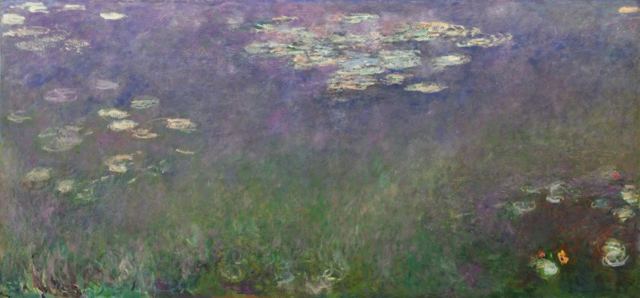
France, late 19th century-early 20th century · c. 1915–26
Water Lilies (Agapanthus)
Claude Monet
Severance and Greta Millikin Purchase Fund · The Cleveland Museum of Art
Image licence: CC0 · Museum record & image source ↗
Hendrick Goltzius was one of many late Renaissance artists who felt compelled to travel to Italy as part of his artistic training. He went with one purpose—to study antique sculpture. Goltzius made drawings on-site and then made engravings after his designs once he returned to Haarlem in 1591. He portrayed the Farnese Hercules from a low viewpoint to capture the awesome experience of first encountering the famous monument. Goltzius showed the sculpture from behind and in shadow, emphasizing its glowing highlights. The print includes two observers, who were assumed by contemporary Dutch commentators to be a self-portrait of Goltzius with his stepson, Jacob Matham, who was also an engraver.
Collection text · The Cleveland Museum of Art · CC0Compare the early apostle series, the 1592 Hercules engraving and the landscape woodcut around 1600. Engraved swelling lines model bodies through controlled incisions; a relief woodcut establishes shapes through a different relation of cut and uncut areas. Monochrome can imply muscular volume or landscape depth without painted local colour.
Artist-wide context; individual works may differ.
Engraving incises lines into a plate; woodcut prints the parts left in relief.
Swelling and tapering lines model muscular bodies; relief cuts simplify landscape into graphic shapes.
Monochrome brightness comes from the spacing and density of printed marks, not painted highlights.
Start with what you can see: shapes, surface, colour and scale. How might the listed materials affect the way this object was made and experienced?
Looking prompt · an invitation to observe, not a historical interpretation.