 ↗
Central Andes (Peru), Recuay people · 1–700 CE
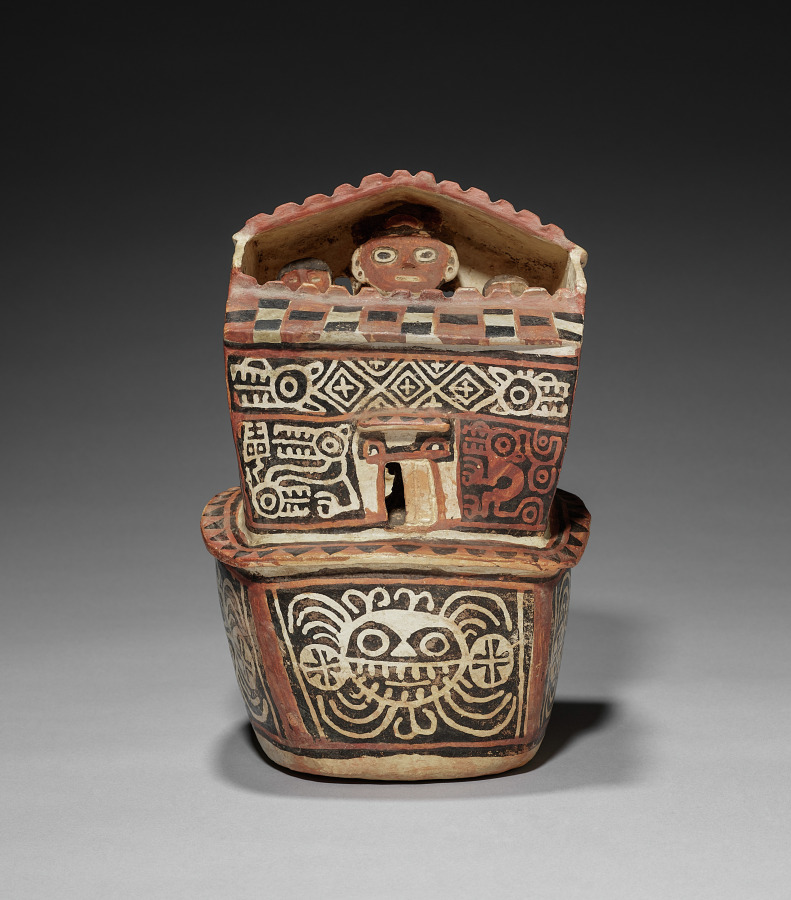
Architectural Vessel
Creator not recorded
Norman O. Stone and Ella A. Stone Memorial Fund · The Cleveland Museum of Art
Image licence: CC0 · Image policy · Museum record & image source ↗
Creator not recorded by the museum
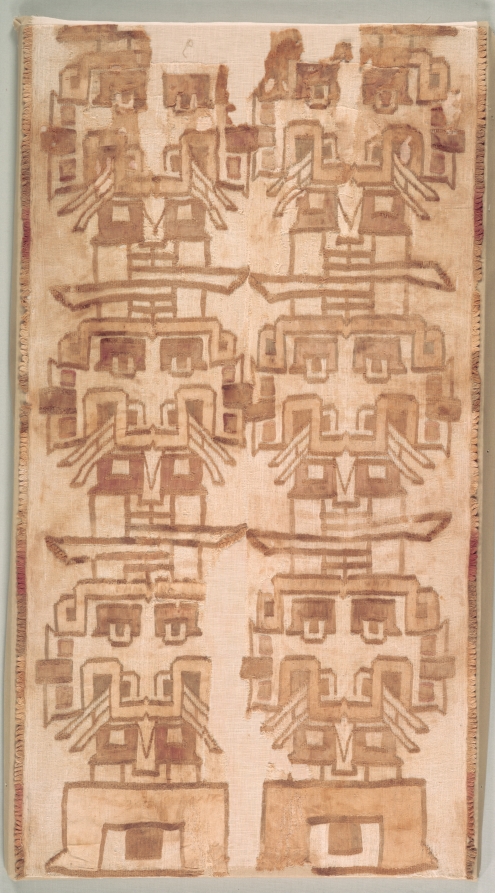
Unfolded, this example is about eight feet long. The museum treats its precise manner of wearing as an open question; a reconstruction with folds is an experiment, not a recovered costume.
A loincloth on a flat mount reveals a pattern all at once. Draw a fold through it to see which elements would still be legible on a moving body.
Site interpretation and practical exercises. Historical and technical evidence is linked below.
Sources for context The Cleveland Museum of Art ↗
Read alongside
Loincloths were basic men’s wear in ancient Peru. But the extraordinary size of some examples—this one is about eight feet long, unfolded—makes it difficult to know how they were worn, except that they were tied around the waist with the decorated panels hanging at the front and back of the body. The appearance may have been that of a billowing skirt.
Collection text · The Cleveland Museum of Art · CC0